
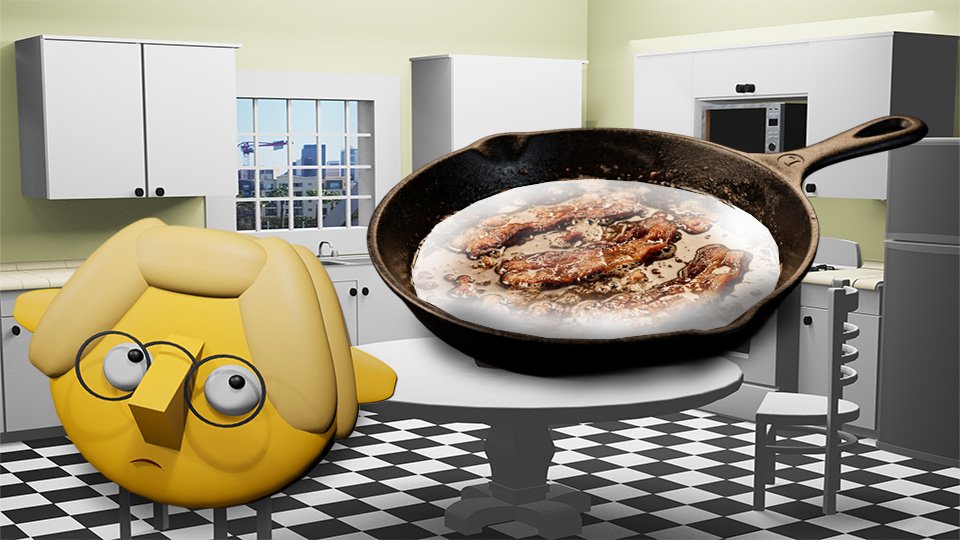
Cast iron’s reputation for being finicky is earned but overstated. Yes, it needs different treatment from your stainless and non-stick pans. No, it’s not so delicate that a wrong move ruins everything.
The Post on Cast Iron: The Exception to the Rule covered the principles. This one is the practical playbook — specifically what to do with the pan in your hand, after each type of cooking situation you’ll actually encounter.
After Light Cooking (Eggs, Sautéed Vegetables, Most Everyday Use)
Time required: 2–3 minutes.
- While the pan is still warm (not hot enough to steam you, but not cold), use a folded paper towel or dish cloth to wipe out any food residue.
- If the food debris comes out cleanly: you’re done. Dry completely over low heat for 1–2 minutes on the stove, apply a whisper-thin coat of neutral oil, store.
- If there’s light residue remaining: rinse with hot water. Wipe again with a cloth or the salt method below if needed. Back to the stove to dry. Oil. Store.
The key here: Light use doesn’t need more than light cleaning. The instinct to “really wash” a pan that barely got dirty is counterproductive with cast iron.
After Cooking Proteins (Chicken, Steak, Fish)
Time required: 3–5 minutes.
Proteins leave more fond (browned residue) and sometimes some stuck bits.
- While the pan is still warm or over low heat, add ¼ cup of water. It will sizzle. This is the cleaning deglaze — the steam loosens stuck material. Scrape with a wooden spoon or spatula.
- Pour the liquid out.
- If there’s still residue: use the chain mail scrubber or the salt method. Sprinkle coarse salt into the pan, scrub with a paper towel using some pressure.
- Rinse with hot water.
- Dry on the stove over low heat until completely dry.
- Apply a very thin layer of neutral oil (flaxseed, canola, vegetable) while still warm. Wipe off any visible excess — you want a sheen, not a coating.
- Store.
After Cooking Acidic Foods (Tomatoes, Wine-Based Sauces, Citrus)
Time required: 4–5 minutes, plus a note.
Acidic foods can interact with cast iron’s seasoning and strip it over time, and can also leach small amounts of iron into the food (generally not harmful, but worth knowing). Cooking acidic foods briefly in cast iron is usually fine. Extended simmering of tomato sauce for 45 minutes — less so.
After cooking with acid:
- Clean as normal — deglaze, rinse, salt-scrub if needed.
- Dry completely on the stove.
- Apply oil generously this time — two light coats instead of one whisper-coat. You’ve earned the extra seasoning step.
If the pan looks dull, stripped, or less non-stick than usual after an acidic cook, do a mini re-seasoning: heat the pan over medium heat until very hot, apply a thin layer of oil, let it smoke briefly, wipe out excess. This restores the seasoning.
After Baking (Cornbread, Frittata, Oven Use)
Cast iron handles oven use beautifully — the whole pan including the handle goes in (assuming no rubber or wooden handles). After oven cooking:
- Let the pan cool enough to handle without oven mitts.
- Use a stiff spatula or chain mail scrubber to remove any stuck baked goods or egg.
- Rinse with hot water. If needed, brief soak of 5 minutes (not longer) to loosen baked-on material.
- Dry on the stove over low heat.
- Oil and store.
After a Real Mess (Burned-On, Stuck Hard, Genuine Disaster)
Time required: 10–15 minutes.
- Fill the pan with water and put it on the stove over medium heat. Bring to a simmer. The simmering water does the deglazing and soaking work simultaneously — very effective for stubborn material.
- With the water still in the pan (carefully — it’s hot), scrape with a stiff spatula. Most material releases.
- Pour out the water. If there’s still residue, sprinkle coarse salt and scrub with a paper towel while the pan is warm.
- For truly extreme situations only: a brief, targeted scrub with steel wool on the affected area. This will remove the seasoning from that spot. That’s fine — you’ll re-season.
- Rinse, dry completely on the stove, apply oil, and consider a re-seasoning pass if needed (see the cast iron care post for the full re-seasoning protocol).
The Three Never-Dos (Repeated Because They Bear Repeating)
- Never soak. Even a 20-minute soak can start rust. In, clean, dry, out.
- Never put in the dishwasher. It will strip the seasoning completely and invite rust. Every time.
- Never store wet. If you skip the stovetop drying step and put the pan away with any moisture, you will find rust. Dry. Every time.
The One Rule That Beats All Others
Dry it on the stove after every wash. This single step prevents the one thing that actually damages cast iron: rust. You can do almost everything else imperfectly, and a well-dried, lightly oiled cast iron pan will survive and thrive.
🛒 Gear Worth Having
- Ringer Original Cast Iron Cleaner — The chain mail scrubber, again, because it belongs in every cast iron household.
- Lodge Seasoning Spray — For the post-wash oiling step. Convenient and purpose-made.
- Crisbee Puck Seasoning — A beeswax-and-oil blend for conditioning and seasoning. Excellent for the enthusiast.
- OXO Good Grips Wooden Spatula — Flat-edged for scraping the pan surface during the deglaze step.
- Lodge 10.25 Cast Iron Skillet — If you don’t have one yet: the one to get. Pre-seasoned, $20–30, will last generations.
As an Amazon affiliate, I earn from each qualifying purchase. Thank you for supporting TumbleBump.
Recommended Reads
- Cast Iron: The Exception to the Rule
- What to Do When It’s Really Baked On
- The “Is It Done?” Checklist
TumbleBump is part of the WhistleBump group – find the rest of the family at WhistleBump.com.
23004
©2026 John D Reinhart/TumbleBump.com – all rights reserved