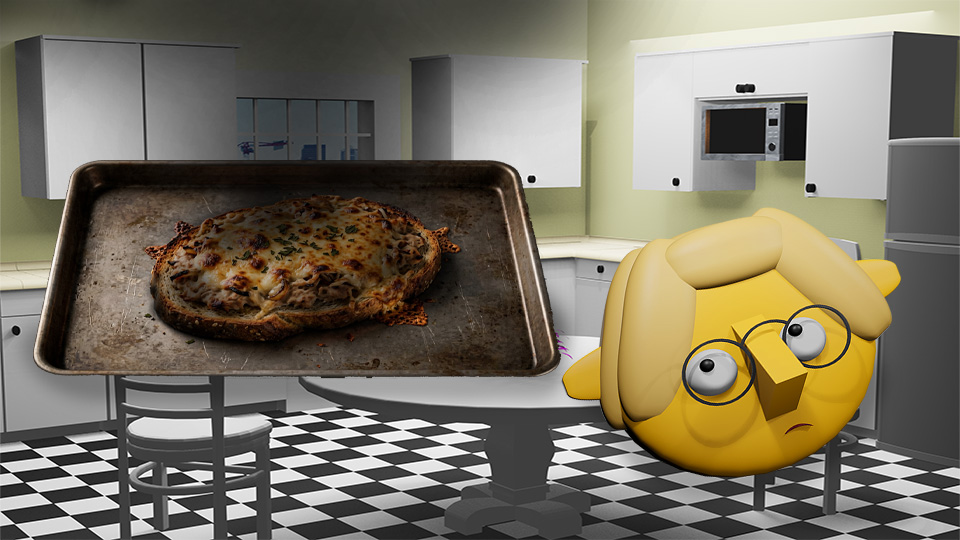
You forgot the pan on the stove. Or the oven decided that “450 degrees for 30 minutes” was also an instruction for the baking sheet. Now something is very, very stuck.
The baked-on pan has defeated better people than you. It’s okay. It happens to everyone who cooks with any regularity, and the good news is that virtually any baked-on situation is recoverable with the right technique at the right escalation level.
The key is knowing that different levels of baked-on require different responses — and that escalating too quickly (going straight for steel wool and aggression) often damages the pan, while starting gently and working up solves the problem without casualties.
Here is the escalating response plan.
Level One: Soak and Wait (For Most Situations)
Before doing anything else, try patience.
Fill the pan with hot water (boiling if you can get it there safely). Add a small squirt of dish soap. Let it soak for at least 30 minutes, ideally 2–4 hours, ideally overnight for severe cases.
The water rehydrates the baked-on material, which initially stuck because it dried and hardened. Given enough time and hot water, most baked-on food will loosen to the point where a standard scrubber or wooden spatula removes it with minimal effort.
After soaking, try scraping and scrubbing before reaching for anything more aggressive. You’ll be surprised how often this is enough.
What it works on: Most food residue, including egg, pasta, starches, caramelized sugars. Less effective on pure oil/fat charring.
Level Two: The Boiling Water Method
When a soak wasn’t enough, apply heat.
Fill the pan with water (about an inch) and put it back on the stove over medium-high heat. Let it boil vigorously for 5–10 minutes. As it boils, use a flat wooden spoon or stiff spatula to scrape the bottom while the water is simmering.
The combination of sustained heat and the mechanical action of scraping in boiling water releases material that cold soaking couldn’t. This method works remarkably well for the stuck layer that survived overnight soaking.
Pour out the water carefully, then scrub what remains.
What it works on: Stubborn food residue, fond that survived soaking, stuck starches and proteins.
Level Three: Baking Soda and Dish Soap
For pans that still have stuck material after levels one and two:
Method: Return a small amount of water to the pan (enough to cover the bottom). Add 2–3 tablespoons of baking soda and a squirt of dish soap. Bring to a boil on the stove. Let it simmer for 10 minutes. The baking soda is mildly alkaline and helps break down greasy, carbonized material that soap alone can’t touch. Scrape and scrub while still warm.
This is the go-to for stainless steel pans with seriously stuck material. It’s also excellent for enamel-coated pots (Le Creuset, etc.) where you don’t want abrasive scrubbing.
Level Four: Barkeepers Friend
When the baking soda method isn’t enough for stainless or stainless-clad pans:
Wet the pan surface. Apply Barkeepers Friend powder, either dry or as a paste with a little water. Let it sit for 2–5 minutes. Scrub with a non-scratch pad.
The oxalic acid in Barkeepers Friend dissolves mineral-based and carbonized residue chemically, while the mild abrasive handles what the chemistry didn’t reach. This combination solves most stainless steel baked-on situations that survive everything else.
Do not use on: Non-stick, cast iron, aluminum.
Level Five: Dryer Sheet Soak (The Unexpected One)
This sounds implausible and works reliably. Place a dryer sheet in the pan, fill with hot water, let it soak overnight.
The fabric softening agents in the dryer sheet (similar to surfactants) penetrate and loosen baked-on food in a way that plain water can’t. By morning, what was immovably stuck wipes away.
Use this for any pan where you want a no-scrub solution. Works on stainless, enamel, and even some glass bakeware.
Level Six: Oven Cleaner (The Big Gun)
For truly extreme situations on surfaces that can tolerate it (stainless steel, oven interiors, cast iron being stripped for re-seasoning):
Commercial oven cleaners (Easy-Off, etc.) contain lye (sodium hydroxide), a powerful base that dissolves carbonized material. These are not casual cleaning products — they require gloves, ventilation, and careful application per product directions.
Apply to the affected area, let sit per instructions (often 30 minutes or overnight for the cold method), wipe clean, and rinse thoroughly.
Where this is appropriate: Oven interiors, stainless steel pans that have survived everything else, heavily carbonized baking sheets. Not for non-stick, not for aluminum without testing, not for delicate finishes.
By Pan Type: Which Escalation Path to Follow
Stainless steel: All six levels, in order.
Non-stick: Level 1 (soak) and Level 2 (boiling water only, gently). Stop there. If it survived gentle treatment, the coating may be compromised.
Cast iron: Level 2 (boiling water on the stove, scraping), Level 3 (baking soda simmer), then if the seasoning is gone, full strip with steel wool and re-season.
Enamel-coated (Le Creuset, etc.): Levels 1, 2, 3. Barkeepers Friend on enamel gently and occasionally. Avoid abrasive scrubbers that scratch the enamel surface.
Glass and ceramic bakeware: Levels 1–3. For really baked-on situations, a paste of baking soda and hydrogen peroxide, left for 30 minutes, usually handles the rest.
Baking sheets (aluminum): Levels 1–2. For carbonized edges, Bar Keepers Friend or a baking soda paste. Aluminum baking sheets with heavy carbonization are cheap enough that replacement is often the right answer.
🛒 Gear Worth Having
- Barkeepers Friend Powder Cleanser — Level 4. Always have it. It solves a remarkable range of problems.
- Easy-Off Oven Cleaner — Level 6. For the serious situations. Keep under the sink and use with gloves and ventilation.
- Scotch-Brite Heavy Duty Scrub Sponge — For stainless steel pans that can handle scrubbing. The aggressive version when non-scratch won’t cut it.
- Lodge Cast Iron Scraper Set — Plastic scrapers specifically sized for cast iron interior scraping. Effective at Level 2 without any surface damage.
- Nonstick Pan Scraper — Flexible plastic scraper safe for non-stick surfaces. For when you need mechanical help without the risk of scratching.
Recommended Reads
- Cleanup as You Go: The Secret to Not Hating Cooking
- The Microwave “Steam Bomb”
- The “Is It Done?” Checklist
Posted on Skippity | CLEANS Category
TumbleBump is part of the John D Reinhart content family. Writer, illustrator, videographer, and accidental filmmaker — find the whole story at JohnDReinhart.com.
23002
©2026 John D Reinhart/TumbleBump.com – all rights reserved

 tumblebump.com