
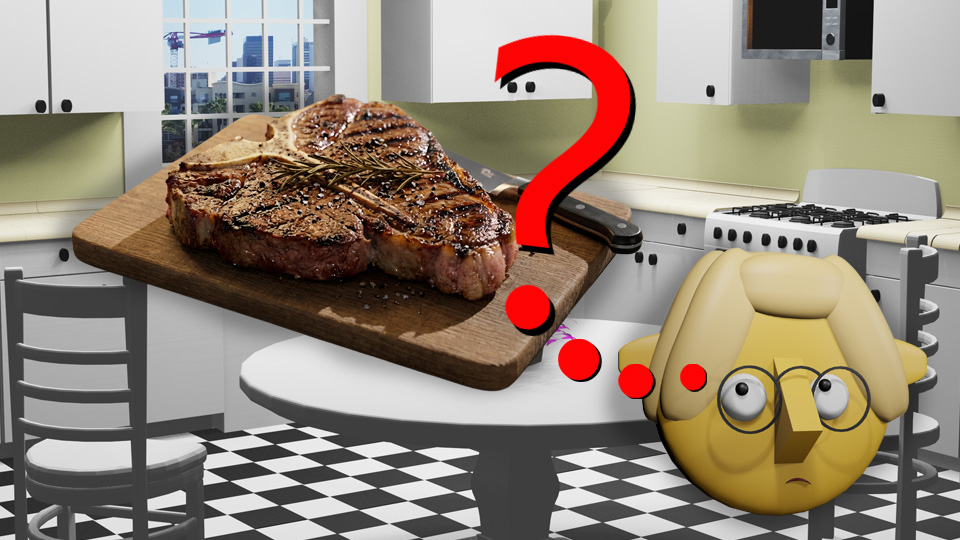
The question haunts every cook, from the brand-new to the pretty-experienced: is it done?
You peer into the pan. You poke it a little. You cut a tiny corner off and squint at it. You put it back. You wait two more minutes and check again. You are, at this point, more committed to uncertainty than to the actual cooking.
Here’s a checklist — food by food, category by category — so you can stop guessing and start knowing.
🥚 Eggs
Scrambled: Done when they look almost done. Pull them off heat while they still look slightly wet — they’ll finish from residual heat and you’ll avoid the rubbery fate.
Fried (sunny side up): The whites should be fully set and opaque. The yolk should still jiggle when you shake the pan.
Fried (over easy/medium/hard): Easy = yolk runs freely. Medium = yolk is jammy, moves slowly. Hard = yolk is fully set, no movement.
Boiled: – Soft boil: 6–7 minutes from boiling water – Medium: 9 minutes – Hard: 12 minutes Then immediately into ice water to stop cooking.
Baked / oven dishes with egg: Set around the edges, barely jiggly in the center. It’ll firm up as it cools.
🍗 Chicken
The gold standard: Internal temperature of 165°F (74°C) at the thickest part, not touching bone.
Visual cues (less reliable, but useful): – Juices run clear (not pink) when pierced – No pink visible when cut at the thickest point – The meat feels firm, not squishy, when pressed
Pro tip: Chicken breast goes from done to dry very quickly. Pull it at 160°F — it’ll coast up to 165°F while resting.
🥩 Beef & Pork
Steak internal temps: – Rare: 120–125°F (very red center) – Medium rare: 130–135°F (warm red center) – Medium: 140–145°F (pink center) – Medium well: 150–155°F (slightly pink) – Well done: 160°F+ (no pink, godspeed)
Ground beef: Always cook to 160°F. No exceptions — ground meat is a different animal than whole cuts, literally.
Pork: 145°F for whole cuts (a little pink is fine and correct). 160°F for ground.
The press test (rough guide): Poke your cooked steak. Rare feels like pressing the meaty base of your thumb when your hand is relaxed. Medium rare feels like pressing it with your hand half-closed. Well done feels firm, like pressing it with a full fist. It takes practice, but it works.
🍝 Pasta
The only test that matters: Fish out a piece and bite it. You want it tender but with a tiny bit of resistance in the very center — that’s al dente. If it’s soft all the way through, it’s overdone. If it snaps, it needs more time.
Ignore the box timing as gospel. Use it as a starting point and start tasting 2 minutes before the minimum.
Bonus tip: Pasta continues cooking for a minute after you drain it, especially if you’re adding it to a hot sauce. Pull it slightly early.
🥦 Vegetables
Roasted: Fork-tender and golden at the edges. If they’re fork-tender but pale, give them more time for color — that’s where the flavor is.
Sautéed: Bright in color (green veg turns vivid before it fades to army green — army green means overdone), tender when poked, still with a little texture.
Steamed/boiled: Pierce the thickest part with a knife tip. It should go in without resistance but not feel mushy.
When in doubt: Taste it. This is always allowed.
🍞 Bread & Baked Goods
Bread: Tap the bottom — it should sound hollow. Internal temp of 190–210°F depending on the type.
Muffins/cupcakes: A toothpick inserted in the center comes out clean or with just a couple of dry crumbs. Wet batter = more time.
Cake: Same toothpick test. Also, the edges should pull slightly away from the pan sides, and the top should spring back when pressed lightly.
Cookies: Pull them when they look underdone. Seriously. They continue cooking on the hot pan. The “done” moment at the oven is always one minute before you think it is.
🍲 Soups, Stews & Sauces
Proteins within: Follow the meat rules above.
Vegetables within: Stab them with a fork. They should be tender.
Stews/braises: When the meat falls apart when pressed with a spoon, it’s done. This is one category where overdone is actually the goal.
Sauces: Done when they coat the back of a spoon and a line drawn through it holds. (This is the “nappe” test and you may now feel fancy.)
🌡️ The One Tool That Eliminates All Guessing
Get a meat thermometer. A good instant-read thermometer costs about $15-30 and removes all uncertainty from meat, fish, bread, and anything else temperature-sensitive. It is the single most useful kitchen tool you are probably not using.
🛒 Gear Worth Having
- ThermoWorks Thermapen ONE — The gold standard of instant-read thermometers. Professionals swear by it.
- TemPro TP19H Digital Meat Thermometer — A highly-rated, budget-friendly alternative that does the job beautifully.
- OXO Good Grips Wooden Spoon Set — For stirring, pressing, and the classic spoon-coating test.
- KitchenAid Silicone Oven Mitts — So you can check things without sacrificing your hands.
- Escali Primo Kitchen Scale — Because precision matters more than you think, especially in baking.
As an Amazon affiliate, I earn from qualified purchases.
Related Reads
- Setting Up the Cook Space: The Basic Toolkit – It’s all so much easier when you have the proper tools.
- The Smoke Alarm is Screaming: Oil Smoke Points – A sure-fire sign it’s overdone…
- Is it Burnt or “Cajun”? The Art of Scraping – What to do if you’ve crossed over to the dark side.
Posted on TumbleBump.com | COOKS Category
TumbleBump is part of the John D Reinhart content family. Writer, illustrator, videographer, and accidental filmmaker — find the whole story at JohnDReinhart.com.
21008
©2026 John D Reinhart/TumbleBump.com – all rights reserved

 tumblebump.com