How to Easily Step Away from Fast Food and Instantly Make Your Life Better

Fast food isn’t the enemy — it’s just a habit. Here’s how to quietly, painlessly step away and start eating like someone who has their life loosely together.

The drive-through didn’t trick you. Let’s be fair about this. You went there because it was fast, it was cheap enough, it was right there, and you were hungry right now. Those are four completely legitimate reasons. Nobody ends up at a drive-through window by accident.

But here’s the thing about fast food: it’s not really food-food. It’s a system. A very well-engineered, heavily optimized system designed to make sure you come back tomorrow. The salt, the fat, the portion size, the smell — all of it tuned like a piano to keep you in the loop.

Stepping away from it isn’t a moral victory. It’s just opting out of someone else’s system and building a slightly better one of your own. Which, it turns out, is not that hard. Annoying to start. Not hard.

🚪 The Door Is Already Unlocked

The biggest myth about cooking at home is that it requires some kind of skill you don’t have yet. It doesn’t. What it requires is a plan, and a plan is just a list of decisions you make in advance so you don’t have to make them at 6 PM when you’re starving and your judgment is completely gone.

Most home meals are not complicated. They’re a protein, something next to it, and maybe something green if you’re feeling ambitious. The drive-through has trained you to think of food as a production. It’s not. It’s just dinner.

The “Ahhhh” moment — when cooking clicks — usually happens the first time you make something and think: wait, that was … fine. That was completely fine. And I know exactly what’s in it. That’s the moment. It’s not dramatic. It’s just quiet and useful.

🗓️ The Plan Is the Whole Game

Fast food wins because it requires zero planning. Home cooking loses because it requires some. The gap is smaller than it feels.

You don’t need a meal plan that looks like a spreadsheet. You need three things:

  • A rotating short list. Five to seven meals you actually like and can make without a tutorial. That’s your whole rotation. You’re done planning.
  • A shopping day. One day a week. Not a long trip — you know what you need because you have a list. In and out.
  • Something already in the fridge. The drive-through beats you on the days there’s nothing at home. Stock a few fallback ingredients and the drive-through loses its best argument.

That’s it. Nutrition meets a calendar. Your dad was right. Deeply annoying, but right.

🔪 The Toolkit (Shorter Than You Think)

You don’t need a gadget for every vegetable. You need a few things that do actual work and stay out of the way the rest of the time. The shiny aisle at the kitchen store is a trap. Walk past it.

The short list of things worth owning:

  • A chef’s knife that’s actually sharp — A dull knife is slower and more dangerous than a sharp one. This is the upgrade that changes everything.
  • A 10-inch skillet, preferably cast iron — This pan does 80% of the work in most home kitchens. Learn to use it well and you barely need anything else.
  • A sheet pan — Protein plus vegetables, olive oil, salt, 400 degrees, 25 minutes. That’s a meal. The sheet pan is the most underrated object in the kitchen.
  • A decent cutting board — Big enough that food doesn’t fall off the edge. Wood or plastic. Not glass. Never glass.

That’s the toolkit. Everything else is optional.

As an Amazon affiliate, I earn from qualifying purchases. Thank you for supporting TumbleBump.

🤭 When Things Go Wrong (They Will)

The eggs will stick. The toast will smoke. Something will come out underseasoned and sad. This is not a sign that you should go back to the drive-through. This is just Tuesday.

Food waste is almost always a planning problem, not a cooking problem. If something’s going bad in the fridge, it’s because it didn’t have a job. Give your groceries jobs before you buy them. “This chicken is for Wednesday.” Done. It has a purpose. It will be eaten.

When something burns or sticks or collapses: ask what happened, file it away, move on. Every bad meal is a lesson that costs about four dollars and takes twelve minutes. That’s a bargain.

🧹 The Cleanup Problem (Solved)

Everyone says their biggest objection to cooking at home is the cleanup. This is at least partially true and also at least partially an excuse. Let’s split the difference.

The secret to kitchen cleanup is doing it in layers while you cook. Pot on to boil? Wipe the counter. Waiting for the oven? Wash the prep bowls. By the time dinner is on the table, half the mess is already gone. The after-dinner cleanup is then genuinely fast — fast enough that it stops being the reason you didn’t cook.

A clean workspace, it turns out, is also a calmer workspace. There’s something about a clear counter that lowers the stress level of the whole operation. It’s not magic. It’s just less chaos.

✨ The Actual Point

Nobody’s asking you to become a person who makes stock from scratch on Sundays and has opinions about olive oil. (Though, fair warning: that person might be closer than you think.)

Stepping away from fast food just means building a slightly better system than the one someone else built for you. A short list of meals. A shopping day. A couple of good pans. That’s all it takes to opt out of the loop.

The door has been unlocked the whole time. You just didn’t need to open it until now.

📚 Related Reads

21011

©2026 TumbleBump.com – all rights reserved

Garlic, Onions, and Other Things the Recipes Gloss Over

The recipes mention garlic and onions like they’re nothing. They are not nothing. Here’s what’s actually happening in your kitchen — and why it’s all completely worth it.

Meta Description:

The recipe said “peel and mince three cloves of garlic.”

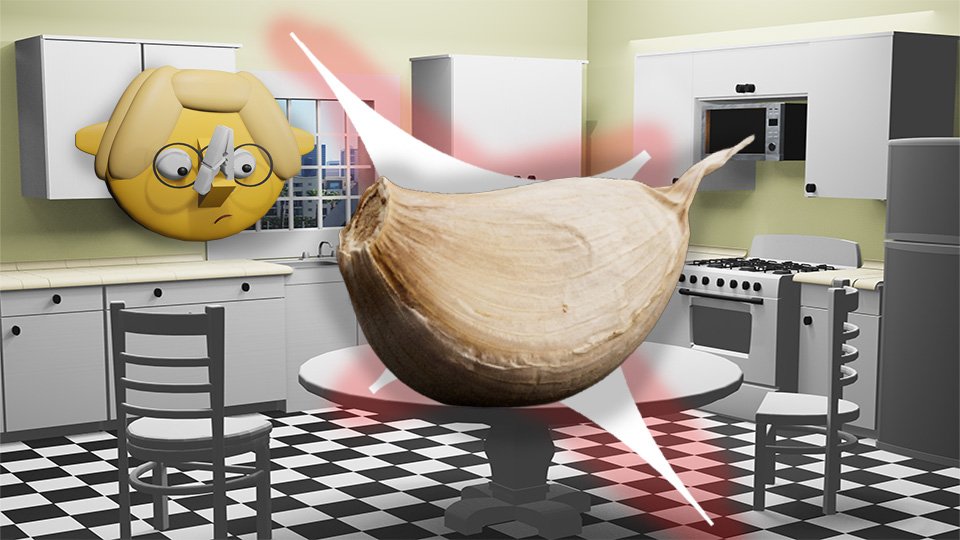
It did not mention that garlic skin is papery and clingy and will stick to your fingers and the knife and the cutting board and somehow also the cabinet door behind you. It did not mention that your hands will smell like garlic for the rest of the day regardless of how many times you wash them. It did not mention any of this because the recipe was written by someone who has peeled ten thousand cloves of garlic and has completely forgotten that it was ever strange.

This is the gap TumbleBump exists to fill.

Cooking is wonderful. It is also, in places: sticky, tearful, smelly, and mildly alarming if nobody warned you what was coming. Consider yourself warned — and reassured. This is all completely normal, it happens to everyone, and there are ways to make most of it easier.

There are approximately 7 gazillion YouTube videos showing you exactly how to handle each of these things step by step. We wholeheartedly encourage you to go watch them. We’re here for the why — the part that makes all the how make sense.

🧄 Garlic: The Fragrant Menace

The peeling problem

A garlic clove sits inside two layers of skin — a papery outer layer that belongs to the whole head, and a thinner inner skin that clings to the individual clove like it has a personal grudge. Getting that inner skin off is the part recipes breeze past with the word “peel.”

Here’s why it clings: garlic skin is dry and light, which means it generates static electricity the moment you touch it. It sticks to your fingers. It sticks to the knife. It drifts across the counter. This is not a sign that you’re doing it wrong. This is just garlic being garlic.

The microwave trick — and why it works

Ten to fifteen seconds in the microwave (for a whole head) or about five seconds per clove causes the moisture inside the garlic to expand very slightly, which loosens the skin from the flesh underneath. The clove essentially slides right out. It works because heat and steam are doing the peeling work instead of your fingers.

The tradeoff: microwaved garlic is very slightly softer than raw, which matters if you’re using it raw in a dressing or salsa. For cooking — sautéing, roasting, adding to a sauce — it makes absolutely no difference whatsoever.

🧄  The smash method is equally fast and requires no microwave: lay the flat side of a knife on the clove and press down firmly with the heel of your hand. The skin splits and the clove pops right out. Bonus: the smashed clove is already partially broken down and will mince much more easily.

The smell problem

Garlic contains sulfur compounds — the same family of chemicals responsible for its flavor and its staying power on your hands. When you cut or crush garlic, those compounds are released and bond readily with the proteins in your skin.

Soap and water alone won’t fully remove them because the compounds aren’t water-soluble. What works better: rubbing your hands on stainless steel under cold water (a stainless steel soap bar is a real product and it actually works), washing with lemon juice, or simply accepting that you cooked with garlic today and your hands are going to tell that story for a while.

💡  Professional cooks smell like garlic. It’s a badge of honor, not a hygiene failure. Welcome to the club.

🧅 Onions: The Tearful Truth

Why your eyes water

When you cut an onion, you rupture its cells and release enzymes that react with each other to produce a sulfur-based gas. That gas rises, hits the moisture on your eyes, and converts into a mild sulfuric acid. Your eyes respond the way any reasonable eyes would respond to sulfuric acid: they water, urgently and without apology.

This is not a flaw in the onion. This is the onion doing exactly what it evolved to do — discouraging things from eating it. You are being chemically discouraged. Cook the onion anyway.

What actually helps

  • A sharp knife. A dull knife crushes the onion cells rather than slicing cleanly through them, releasing far more of the irritating compounds. The sharper the knife, the fewer tears.
  • Cold onion. Chilling the onion in the refrigerator for thirty minutes before cutting slows the chemical reaction. Less gas, fewer tears.
  • Good ventilation. Cut near an open window or under a running exhaust fan. The gas disperses before it reaches your eyes.
  • Contact lenses. Contact lens wearers are frequently immune to onion tears because the lenses physically block the gas from reaching the eye surface. An unexpected benefit of imperfect vision.

😢  Goggles work perfectly. Nobody wears them. Onion-cutting goggles are a real product, they are completely effective, and they will make you look absolutely unhinged in your own kitchen. Worth knowing they exist.

The smell

Onion smell on hands is the same sulfur-compound situation as garlic, and responds to the same remedies. Stainless steel, lemon juice, time. The cutting board will smell too — a quick rub with half a lemon, then a wash, sorts it right out.

🍗 Raw Chicken: Just Breathe

Raw chicken makes a lot of people deeply uncomfortable, and understandably so. It’s cold, it’s slippery, it smells faintly of itself, and everything you’ve ever heard about food safety is playing on a loop in the back of your mind.

Here’s the reassuring truth: raw chicken is safe to handle. It just requires a little protocol.

  • Keep it cold until you’re ready to cook it. Bacteria multiply at room temperature. Straight from the fridge to the pan is the right move.
  • Don’t wash it. Rinsing raw chicken in the sink spreads bacteria to the sink, the counter, and anything nearby via water droplets. Cooking to 165°F kills everything. Skip the rinse.
  • Use a dedicated cutting board for raw meat, or wash your board thoroughly with hot soapy water before using it for anything else.
  • Wash your hands immediately after handling raw chicken and before touching anything else in the kitchen. This is the whole protocol. It’s not complicated.

🍗  The slipperiness is just moisture. Pat chicken dry with a paper towel before cooking and it handles much more easily — and browns better in the pan. Two problems solved at once.

🐟 Fish: The Smell Situation

Fresh fish should smell like the ocean — clean, briny, pleasant even. Fish that smells powerfully of fish is fish that is past its prime. That’s the first thing to know.

The second thing to know is that cooking fish fills the kitchen with a smell that lingers considerably longer than the cooking itself. This is simply the nature of fish. Open a window. Run the exhaust fan. Accept it as the price of a genuinely excellent dinner.

Fish smell on hands and pans

  • Hands: lemon juice or white vinegar cuts fish smell more effectively than soap alone. Rub, rinse, done.
  • Pans: a quick wash with hot soapy water immediately after cooking prevents the smell from setting in. Don’t let a fish pan sit.
  • The kitchen: simmer a small pot of water with lemon slices and a splash of vanilla extract after cooking fish. It neutralizes the smell remarkably quickly and makes the kitchen smell like a bakery, which is a significant upgrade.

🌶️ Pepper Seeds and Other Small Chaos

Hot pepper hands

The capsaicin in hot peppers — the compound responsible for heat — bonds to your skin and does not come off with soap and water. If you touch your eyes after handling hot peppers, you will have a very bad few minutes.

Wear disposable gloves when working with hot peppers. This is not overcautious. This is just correct. If you’ve already made the mistake, wash your hands with dish soap (which cuts oils better than hand soap), then rub with vegetable oil, then wash again. It helps. Somewhat.

Sticky dough

Bread and pastry dough sticks to hands, counters, rolling pins, and ambition. Flour is the answer — a light dusting on your hands and the work surface keeps things moving. The instinct is to add more and more flour, but too much changes the dough. Just enough to prevent sticking is the goal.

The general chaos of a busy stovetop

Oil spits. Sauce bubbles over. Steam burns are sneaky and arrive without warning. A kitchen in action is a mildly hazardous environment, and experienced cooks navigate it with a combination of awareness and respect rather than fearlessness.

Keep a kitchen towel on your shoulder. Use it for everything — pan handles, spills, your hands. Don’t reach over open flames. Turn pot handles inward so they can’t be bumped. These habits become automatic within a few weeks and make the kitchen feel safe and manageable rather than chaotic.

✅  Every cook has burned themselves on a pan handle, splattered sauce on a clean shirt, and dropped something at the worst possible moment. Every single one. You are not uniquely clumsy. You are just learning, which is exactly the right thing to be doing.

🛒 What to Get

The Essentials

  • Stainless Steel Soap Bar — Removes garlic, onion, and fish smell from hands better than regular soap. Sounds implausible, works completely.
  • Sharp Chef’s Knife (8-Inch) — A sharp knife is the single best solution to onion tears, garlic frustration, and most other prep problems. Dull knives make everything harder and more dangerous.
  • Nitrile Disposable Gloves — For hot peppers, raw chicken, beets, or anything else you’d rather not have on your hands. Keep a box in the kitchen.
  • Plastic Cutting Board Set — Color-coded boards for meat, vegetables, and fish keep cross-contamination from becoming a concern. Simple and effective.
  • Kitchen Exhaust Fan (Under-Cabinet) — For fish nights and anything else that produces strong smells. Ventilation is the most underrated kitchen upgrade.

Nice to Have

  • Knife Sharpener (Pull-Through) — Keeps your chef’s knife sharp between professional sharpenings. Sharp knives are safer and more pleasant to use.
  • Lemon Squeezer — Lemon juice is the remedy for garlic hands, fish smell, cutting board odor, and about a dozen other kitchen realities. Keep lemons on hand.
  • Kitchen Towels (Set of 6) — Keep one on your shoulder while you cook. Use it for everything. Replace them often. The most useful thing in the kitchen after the knife.

As an Amazon Associate, I earn from qualifying purchases. Thank you for supporting TumbleBump.

🔗 Related Reads

21017

©2026 TumbleBump.com — All rights reserved

Cleanup as You Go: The Secret to Not Hating Cooking (And Actually Wanting To Do It Again)

The meal is 30 minutes. The cleanup is an hour. Unless you do it as you go — in which case it’s ten minutes and you actually want to cook again tomorrow.

Cleanup as You Go: The Secret to Not Hating Cooking

You just made a great dinner. Your significant other is impressed. You feel like a person who has their life together.

Then you turn around.

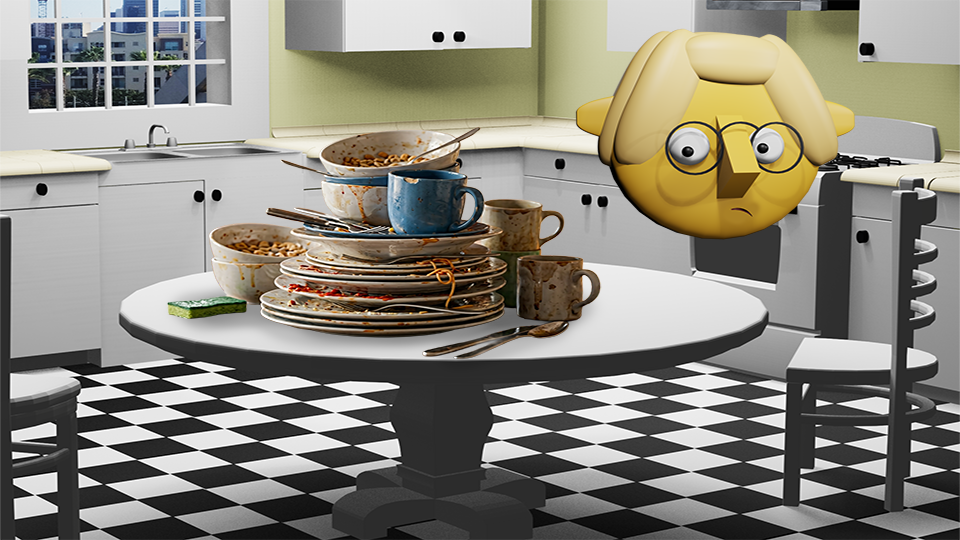
The kitchen looks like a tornado hit a restaurant supply store. There’s a cutting board doing its best impression of a crime scene. A mysterious bowl with flour residue. Oil splatters on every available surface. And somewhere in the back of your mind, a small voice is saying: “pizza from now on.”

Here’s what nobody tells you: the meal is 30 minutes. The cleanup is an hour. And the cleanup is why people stop cooking.

The fix is simple, and it has a name: cleanup as you go. Ten extra minutes during cooking. No hour of dish purgatory afterward. And a kitchen you don’t dread walking back into tomorrow.

🧮 The Math

The hard way:

  • Cook: 30 minutes
  • Cleanup after: 60 minutes of regret
  • Total: 90 minutes, ending in resentment

The smart way:

  • Cook (with cleanup woven in): 40 minutes
  • Cleanup after: 5 minutes
  • Total: 45 minutes, ending in satisfaction

You’re not adding time. You’re moving it — from the end of the evening, when you’re tired and full and done, to the middle, when the stove is doing the work anyway.

🍽️ The Moves

Set up before you start. Fill the sink with hot soapy water. Put a trash bowl on the counter for scraps, peels, and empty packaging. Everything has a place before the chaos begins.

Clean the cutting board immediately. The moment you’re done cutting, rinse the board and the knife. Raw chicken juice that’s been sitting for 40 minutes is a food safety problem. Raw chicken juice from two minutes ago rinses right off.

Wipe splatters while they’re fresh. Keep a damp cloth near the stove. A fresh oil splatter takes two seconds to wipe. A dried one takes five minutes and your will to live.

Rinse as you empty. Used a bowl to hold chopped onions? It’s empty now — rinse it and drop it in the soapy water. Don’t let things sit and crust over. An empty bowl takes five seconds to rinse. A crusted one takes five minutes.

Soak pots the moment they’re empty. Food just came out of the pan. Fill it with hot water right now. Don’t scrub it — just fill it. While you eat dinner, the water is doing the work. By the time you come back, it wipes clean.

Keep one clear counter. Clutter creates chaos. Designate one counter for active cooking and keep everything else off it. A clear surface means you can actually move, and you’re not knocking things into other things.

❌ What Not to Do

  • Leave oil splatters to dry on the stove. They fossilize. Wipe them now.
  • Stack dirty dishes instead of rinsing them. A stack of dishes is a Jenga tower of regret.
  • Let the cutting board sit with raw meat residue. Wash it. Right now. We mean it.
  • Wait until after eating to deal with the pots. At least fill them with water. Your future self is begging you.

🌟 The Payoff

When cooking cleanup stops being a nightmare, cooking stops being a chore.

You finish eating, spend five minutes on the last few dishes, and walk out of a clean kitchen. Tomorrow you’ll actually consider cooking again. The night after that too. Before long you’re the person who just… cooks. Casually. Like it’s not a big deal.

That’s the whole game. Ten minutes during cooking. A kitchen you don’t hate. A habit that sticks.

Related Reads

Posted on TumbleBump.com | CLEANS Category

23006

©2026 TumbleBump.com All rights reserved