You just made a great dinner. Your family’s impressed. You feel, for a solid thirty seconds, like a person who has their life together.
Then you turn around.
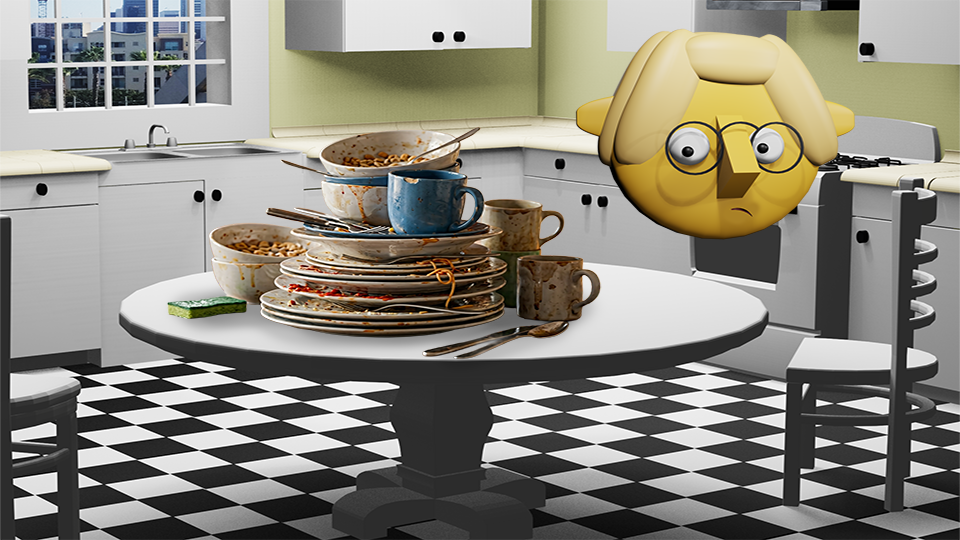
The kitchen looks like a tornado hit a restaurant supply store. There’s a cutting board doing its best impression of a crime scene. A mysterious bowl with flour residue on it. Oil splatters on every available surface. And somewhere in the back of your mind, a small voice is saying: “pizza from now on.”
Here’s what nobody tells you: the meal is 30 minutes. The cleanup is an hour. And the cleanup, not the cooking, is the actual reason people quietly stop cooking. The fix has a name — cleanup as you go — and it’s simpler than it sounds: ten extra minutes woven into the cooking itself, instead of an hour of dish purgatory waiting on the other side of dinner.
🧮 The Math
The hard way: thirty minutes to cook, sixty minutes of regret afterward, ninety minutes total, ending in resentment. The smart way: forty minutes to cook with cleanup woven in, five minutes afterward, forty-five minutes total, ending in something closer to satisfaction. You’re not adding time to the evening. You’re just moving it — from the end, when you’re tired and full and done, to the middle, when the stove’s already doing the work anyway.
🍽️ The Moves
Set up before you start. Fill the sink with hot soapy water, and put a bowl on the counter for scraps and peels. Everything has a place before the chaos actually begins.
Clean the cutting board immediately. The moment you’re done cutting, rinse the board and the knife. Raw chicken juice sitting for forty minutes is a food safety problem. Raw chicken juice from two minutes ago rinses right off.
Wipe splatters while they’re fresh. Keep a damp cloth near the stove. A fresh oil splatter takes two seconds to wipe. A dried one takes five minutes and your will to live.
Rinse as you empty. Used a bowl to hold chopped onions? It’s empty now — rinse it and drop it in the soapy water rather than letting it sit and crust over. An empty bowl takes five seconds. A crusted one takes five minutes.
Soak pots the moment they’re empty. Food just came out of the pan — fill it with hot water right now. Don’t scrub it, just fill it. While you eat, the water’s doing the work. By the time you’re back, it wipes clean.
Keep one clear counter. Clutter creates chaos. Designate one counter for active cooking and keep everything else off it, so there’s room to actually move without knocking things into other things.
❌ What Not to Do
Don’t leave oil splatters to dry on the stove — they fossilize, and wiping them now takes a fraction of the effort scraping them later will. Don’t stack dirty dishes instead of rinsing them; a stack of dishes is a Jenga tower of regret waiting for the wrong moment to fall. Don’t let a cutting board sit with raw meat residue on it — wash it, right now, no exceptions. And don’t wait until after eating to deal with the pots — at minimum, fill them with water. Future you will be grateful.
🌟 The Payoff
Once cleanup stops being a nightmare, cooking stops being a chore. You finish eating, spend five minutes on the last few dishes, and walk out of a clean kitchen — which means tomorrow, you’ll actually consider cooking again. And the night after that. Before long, you’re just someone who cooks, casually, like it’s not a big deal. That’s the whole game: ten minutes woven into cooking, a kitchen you don’t dread, and a habit that actually sticks.
🛒 Gear Worth Having
OXO Good Grips Soap Dispensing Dish Brush — Loads soap into the handle so rinsing a bowl mid-cook is a five-second reflex instead of a whole separate errand to the sink.
Sink Caddy and Kitchen Organizer — Keeps the brush, sponge, and soap within actual arm’s reach, which is half the battle in making cleanup-as-you-go a habit rather than a chore.
Countertop Compost Bin with Lid — The scrap bowl this post keeps mentioning, upgraded — contains the smell and mess of peels and trimmings until it’s time to empty it.
As an Amazon affiliate, I earn from qualifying purchases. Thank you for supporting TumbleBump.
📖 Related Reads
- Setting Up the Cook Space: The Basic Toolkit Every Cook Should Have
- Is It Burnt or “Cajun”? The Art of Scraping
- The Sunday Reset: How to Calendar Your Meals Without Losing Your Mind
TumbleBump is part of the WhistleBump group – find the rest of the family at WhistleBump.com.
23006
©2026 John D Reinhart/TumbleBump.com — All rights reserved