
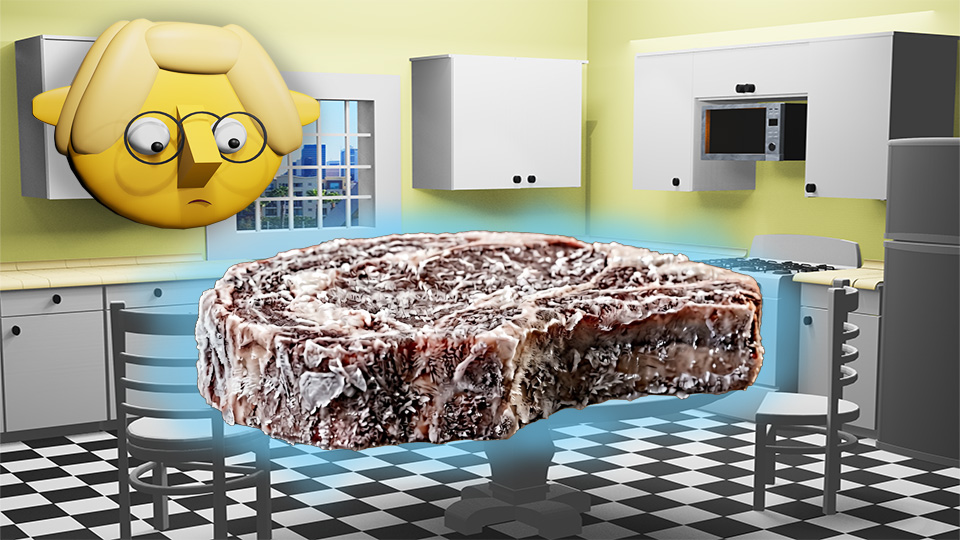
This is not a crisis. This is a logistics problem, and logistics problems have solutions. The key is understanding “why” each solution works — because once you get the logic, you’ll never panic about a frozen chicken breast again.
The underlying principle behind all of this: bacteria multiply rapidly between 40°F and 140°F. That’s the danger zone. Every thawing method is really just a strategy for getting meat from frozen to cooked without spending too long in that range. Keep that in mind and everything else makes sense.
There are roughly seven-gazillion YouTube videos for each of these methods. The mission here is to help you see what those different methods are.
🔥 Option One: Just Cook It Frozen (Fastest, Genuinely Works)
Here’s the thing nobody tells you: you don’t always have to thaw meat first. Many proteins cook perfectly well from frozen — the result is slightly different from thawed-then-cooked, but often completely indistinguishable on the plate.
Why it works: the oven or pan simply does the thawing and cooking in one continuous process. The exterior thaws first and starts cooking while the interior catches up. The logic is sound. The math just requires more time — roughly 50% longer than you’d use for thawed meat — and a thermometer to confirm you got there.
- Chicken thighs and breasts — oven at 400°F, straight from frozen, more time than usual, thermometer to 165°F at the thickest part. Works reliably.
- Ground meat — frozen block into a pan on medium heat. As the exterior thaws, break it apart and keep working toward the center. Takes longer, works perfectly for pasta sauce or tacos where texture isn’t precious.
- Fish fillets — a quick rinse under cold water removes ice crystals, then cook as normal with a few extra minutes. Thin fillets from frozen are a genuinely good meal. Don’t let anyone tell you otherwise.
- Sausages and meatballs — excellent from frozen. Bake or simmer, add time, done.
What doesn’t work from frozen: thick steaks and pork chops. The exterior will be fully cooked before the interior has thawed, producing the specific culinary horror of charred outside, raw inside. Don’t do this to yourself or the steak.
💧 Option Two: Cold Water Thaw (30–60 Minutes, The Smart Move)
When you have a little time and want properly thawed meat, this is the method. Drop the sealed packaging into a bowl of cold water, change the water every 30 minutes. Done in under an hour for most cuts.
Why cold water and not hot? This is the question that unlocks the whole thing. Hot water thaws the exterior fast — but fast means the outer surface rockets through the danger zone while the interior is still frozen. You’ve created a situation where part of your meat has been sitting at bacteria-friendly temperatures for an extended period. Cold water conducts heat into the meat much faster than air, but slowly enough that the surface stays below the danger zone while the interior catches up. It’s the Goldilocks method. Fast enough to be useful. Safe enough to actually work.
The one rule: cook immediately after cold water thawing. Don’t thaw it and then put it back in the fridge for later. The window is now.
🌀 Option Three: Microwave Defrost (10–20 Minutes, Handle With Care)
The microwave defrost setting exists for exactly this situation and it works — imperfectly, but it works.
Why imperfectly? Microwaves heat unevenly. Thin edges and corners thaw faster than thick centers, which means some spots can start actually cooking while other parts are still frozen. The gap between “almost thawed” and “accidentally cooked the outside” is narrow and the microwave doesn’t care about your dinner timeline.
The workaround: use the defrost setting, check every two or three minutes, rotate and flip, and pull it out before it’s fully thawed. Let cold water finish the last bit. Then cook immediately — microwave-defrosted meat has been through enough temperature fluctuation that it should go straight into the pan.
Best for thin cuts where the uneven heating problem is smaller. Less useful for anything thick.
🚫 The Option That Sounds Fine But Isn’t: The Counter
Leaving frozen meat on the counter to thaw at room temperature. This is the method that food safety professionals lose sleep over, and here’s the exact reason why:
The exterior of the meat thaws first and immediately enters the danger zone — above 40°F, where bacteria multiply rapidly. While the interior is still frozen and perfectly safe, the outside has been sitting at room temperature accumulating a bacterial load. By the time the whole piece is thawed, the exterior has been in the danger zone for hours.
Yes, plenty of people have done this for decades without getting sick. Luck is a real variable in food safety. So is the temperature of your kitchen, the type of meat (poultry carries considerably more risk than beef), and whether anything else went slightly wrong that day. The cold water method takes the same amount of time and eliminates the variable entirely. There is no good reason to choose the counter.
🔄 The Honest Option: Pivot
Sometimes the most dignified move is to change the plan entirely.
Eggs. Pasta with whatever’s in the pantry. A quesadilla. The omelet that takes eight minutes and uses what’s already thawed. These exist for exactly this moment.
The frozen meat goes into the refrigerator tonight and thaws slowly and safely overnight — the gold standard method that preserves quality and requires exactly zero attention. It becomes tomorrow’s dinner. Tonight is a pivot night, and pivot nights have saved more dinners than any thawing method ever invented.
The freezer is not a failure. It’s inventory. Work with what you’ve got.
🛒 Gear That Helps
- ThermoWorks Thermapen instant-read thermometer — Cooking from frozen requires a thermometer even more than cooking from thawed. The exterior looks done long before the interior is safe. Ten seconds and you know.
- Large stainless mixing bowl — Wide and deep enough to fully submerge most proteins for the cold water method. The right bowl makes the right method easy.
- Ziploc gallon freezer bags — For resealing proteins before the cold water soak if the original packaging has been opened. Keeps the water out and the situation sanitary.
- Instant Pot Duo 7-in-1 — Pressure cooks chicken from frozen in about 25 minutes. The consistent, reliable, set-it-and-walk-away solution to the forgotten defrost. If this problem happens to you regularly, this is the answer.
As an Amazon affiliate, I earn from each qualifying purchase. Thank you for supporting TumbleBump.
✨ The Short Version
You have four legitimate options and one illegitimate one. Cook it frozen, cold water thaw it, carefully microwave defrost it, or pivot to something else entirely. The counter is not on the list.
Every method works when you understand the logic behind it. The logic is always the same: keep the meat out of the danger zone as much as possible and get it to a safe internal temperature before it hits the plate.
The freezer forgot nothing. You just need a plan B. Now you have four of them.
📚 Related Reads
- Your Nose Is Not a Food Safety Inspector
- The Is It Done? Checklist
- Five Meals That Are Faster Than the Drive-Through
TumbleBump is part of the John D. Reinhart content family. Writer, illustrator, videographer, and accidental filmmaker — find the whole story at JohnDReinhart.com.
26011
©2026 John D Reinhart/TumbleBump.com – all rights reserved

 tumblebump.com