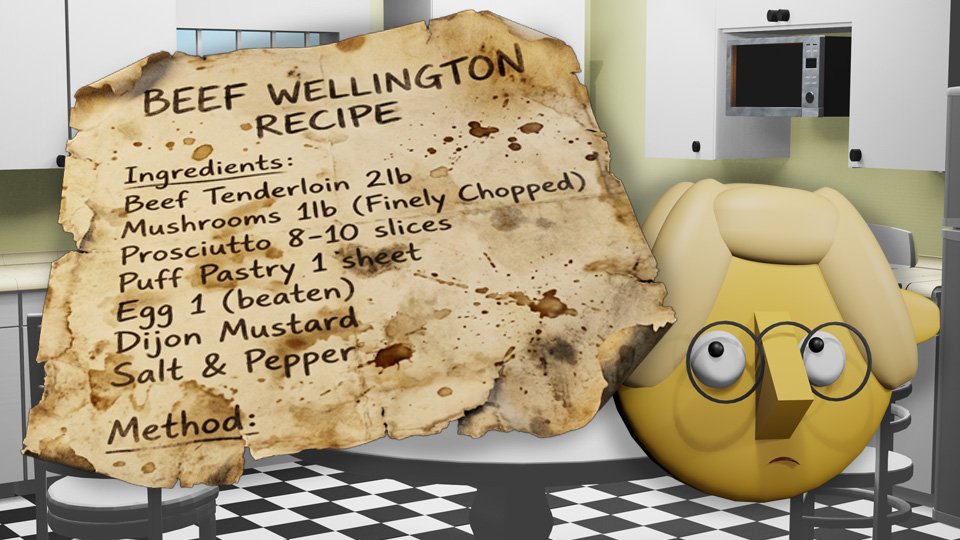
Recipes are, in theory, a set of instructions. In practice, they are a set of instructions written by someone who has made this dish 40 times and has stopped noticing the parts that would confuse a beginner, because those parts have become as automatic as breathing.
This is not the recipe writer’s fault. It’s just how expertise works. But it does mean you need to read recipes with a specific kind of critical eye — catching the assumptions, translating the jargon, and planning ahead for the moments they forgot to mention.
Here’s how.
Step One: Read the Whole Thing Before You Start
This sounds obvious and is widely ignored. Read the entire recipe — ingredients and instructions — before you turn on a single burner.
Why? Because recipes contain surprises. “Leave to marinate overnight.” “Let the dough rest for 2 hours.” “Make the sauce first.” If you find these surprises after you’ve already started, you will have a bad time. If you find them before you start, you can plan around them.
Reading through first also shows you the overall shape of the dish — what order things happen in, what the goal is, what you’re building toward. This makes the individual steps make sense instead of feeling like arbitrary instructions from a stranger.
Step Two: Check the Ingredients for Prep Notes
Look carefully at how each ingredient is listed. There’s a difference between:
- “1 cup mushrooms, sliced” (slice them before you start)
- “1 cup sliced mushrooms” (this is just describing what you need)
The difference is that a cup of pre-sliced mushrooms has more mushrooms in it than the cup of un-sliced mushrooms. That little comma tells you to bring a whole cup of whole mushrooms to slice. Without the comma, bring a cup of mushroom slices. It can make quite a difference.
Similarly, while “2 cloves garlic, minced” means the garlic gets minced as part of your prep, “2 cloves of minced garlic” means you’re bringing the cloves pre-minced.
Other common prep notes to watch for:
- “Room temperature butter/eggs” — plan ahead by 30 minutes
- “Divided” — this ingredient gets used in two different steps, don’t use it all at once
- “Finely chopped” vs. “roughly chopped” — the texture difference matters more than you’d think
Step Three: Know What the Jargon Means
Recipes assume you know certain words. Here are the most common ones worth having in your vocabulary:
Heat levels: –
- Sauté — cook in a little fat over medium-high heat, stirring occasionally
- Simmer — cook in liquid just below boiling (small bubbles, gentle movement)
- Blanch — briefly boil, then immediately plunge into ice water to stop cooking
Cutting terms:
- Mince — as small as possible (garlic, herbs)
- Dice — small, even cubes (about ½ inch)
- Julienne — thin matchstick strips
- Chiffonade — stack leaves, roll, and slice into thin ribbons (usually herbs or leafy greens)
Other terms:
- Fold — gently combine to preserve the air bubbles that give whipped eggs, cream, and delicate batters their light texture. Stirring or overmixing collapses those bubbles and flattens the result.
- Deglaze — add liquid to a hot pan to lift the browned bits off the bottom (this is flavor, don’t skip it)
- Season to taste — add salt and pepper until it tastes right to you, not to some abstract standard
- Rest — leave cooked meat alone for a few minutes so the juices redistribute
Step Four: Notice What the Recipe Doesn’t Tell You
Good recipes have gaps. Here are common ones:
“Cook until golden.” Golden means what, exactly? Look for actual browning, not just color change. The Maillard reaction (the science of browning) is where flavor lives.
“Season to taste.” This is instruction to actually taste the food and add salt/pepper until it tastes good. It’s not a get-out-of-jail-free card — it’s an active step.
Prep time estimates. “Prep: 15 minutes” was written by someone who can dice an onion in 45 seconds. Double or triple it until you’re experienced.
“A splash” / “a handful” / “a knob of butter.” These are vibes, not measurements. A splash is about a tablespoon of liquid. A handful of herbs is about ¼ cup loosely packed. A knob of butter is roughly a tablespoon.
Step Five: Set Up Your Mise en Place
Fancy French phrase, practical concept: mise en place means “everything in its place.” Before you start cooking, measure, chop, prep, and organize everything the recipe calls for. Put each ingredient in its own small bowl or measuring cup.
Then, when you start cooking, you just reach for things instead of scrambling to chop garlic with one hand while something is burning in the pan.
This is the single biggest difference between a stressful cooking experience and a calm one.
Step Six: Trust Your Senses More Than the Recipe
The recipe says cook for 20 minutes. If it’s browning heavily at 12, check it. If it looks pale at 20, give it more time.
Recipes are written for an average oven, an average stove, and average ingredients. Your kitchen is specific. Your oven runs hot or cool. Your onions might be bigger or smaller than the writer’s. Cooking times are guidelines, not commandments.
Look. Smell. Taste. Touch. These are your real instruments. The recipe is just the sheet music.
🛒 Gear Worth Having
- OXO Good Grips 3-Piece Mixing Bowl Set — Perfect for mise en place. Prep everything ahead into these and cooking becomes genuinely calm.
- Pyrex Glass Measuring Cups Set — For liquids. Clear, durable, and a kitchen staple.
- KitchenAid Measuring Cups and Spoons — For dry ingredients. The right tools make exact measurements easy.
- Salt Fat Acid Heat by Samin Nosrat — The best book written on understanding cooking rather than just following it.
- The Food Lab by J. Kenji López-Alt — Scientific deep-dives into why recipes work (and why they fail). Endlessly useful.
As an Amazon affiliate, I earn from qualified purchases. Thank you for supporting TumbleBump.
Related Reads
- The Anatomy of a $100 Grocery Haul
- Cleanup as You Go: The Secret to Not Hating Cooking
- Setting Up the Cook Space: The Basic Toolkit
TumbleBump is part of the WhistleBump group – find the rest of the family at WhistleBump.com.
21006
©2026 John D Reinhart/TumbleBump.com – all rights reserved