
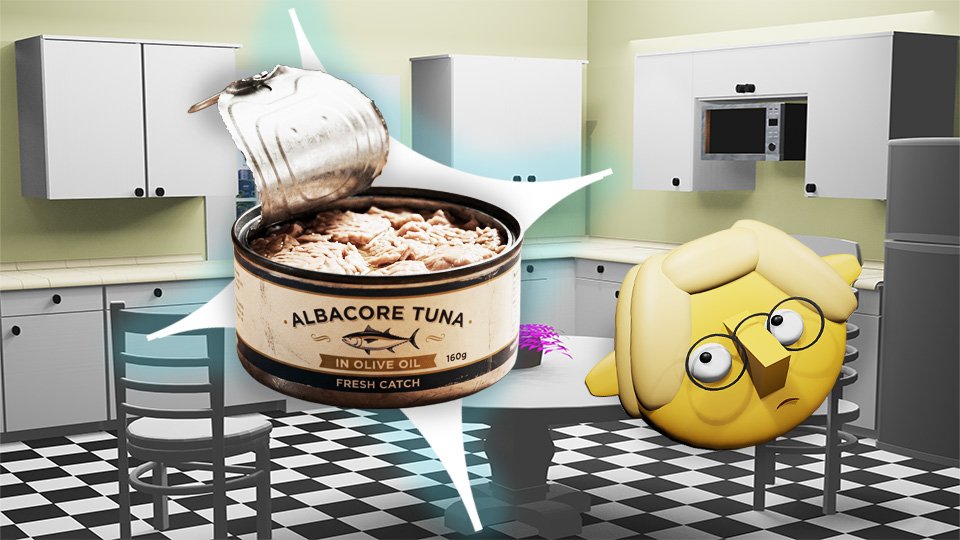
You’ve stood in the canned fish aisle. You’ve looked at forty-seven nearly identical cans of tuna and grabbed the cheapest one because honestly, what’s the difference?
Quite a bit, actually. Canned tuna ranges from “fine for the cat” to “why is this so good?” and the gap between them is smaller than you think — in price, in effort, and in the number of decisions you have to make. You just need to know what you’re looking at.
Here’s the whole thing, from the can to the plate.
🫙 Decision One: Oil or Water?
This is the one that matters most and the one most people never think about. Water-packed tuna is leaner and more convenient. Oil-packed tuna tastes better. That’s the whole argument.
Water-packed: Lower in fat and calories. Milder flavor. Easier to drain and use in anything. The default for most people and perfectly respectable. Works well when the tuna is playing a supporting role — mixed into a casserole, stuffed into a sandwich with a lot going on.
Oil-packed: Richer, silkier, more flavorful. The oil keeps the tuna moist and adds body to whatever you’re making. When the tuna is the star — tuna salad, a tuna melt, tuna on crackers — oil-packed is the one that makes people ask what you did differently.
Olive oil vs. vegetable oil: If you’re going oil-packed, go olive oil. Vegetable oil adds fat without adding flavor. Olive oil adds both, and in a tuna salad the difference is noticeable. Good olive oil-packed tuna — the kind worth eating straight from the can with a fork — is packed in decent olive oil.
And yes, you can use the olive oil from the can. Drizzle it on toast, use it in the dressing, stir it into the tuna salad. It’s already flavored. Don’t waste it.
📋 Decision Two: Solid, Chunk, or Flaked?
This is about texture, and texture matters depending on what you’re making.
- Solid (or “solid white”): Large, intact pieces. The premium option. Best when you want visible chunks of tuna in the finished dish — a composed salad, a nice pasta, something where presentation counts for something.
- Chunk: Smaller pieces, still recognizable as tuna. The most common and most versatile. Great for tuna salad, melts, casseroles — anywhere the tuna gets mixed with other things. This is the everyday workhorse.
- Flaked: Very fine, almost paste-like. Best for dips or anywhere you want the tuna to disappear into the mixture. Less common, less necessary.
🐟 Decision Three: Which Tuna?
The label says “tuna” but the species varies, and species affects both flavor and mercury content.
- Albacore (white tuna): Mild, firm, pale. The most popular variety in the U.S. Slightly higher in mercury than skipjack, so the FDA suggests limiting it if you’re eating canned tuna several times a week.
- Skipjack (light tuna): Darker, stronger flavor, softer texture. Lower in mercury. The “chunk light” on most shelves is skipjack. Cheaper, more sustainable, and perfectly delicious in anything that’s getting seasoned and mixed anyway.
For everyday tuna salad and melts: chunk light skipjack in olive oil. For something you want to look beautiful on a plate: solid white albacore. That’s the simple version of the whole decision.
🎯 So What Should You Actually Buy?
The Costco aisle shrug is understandable. Here’s a quick orientation:
- Everyday use: Store brand chunk light in olive oil. Cheap, solid, does the job. If your store doesn’t carry olive oil-packed, Starkist or Bumblebee chunk light in water is the fallback.
- Step up: Wild Planet Wild Albacore or Wild Skipjack. Pole-and-line caught, no fillers or broth added, just tuna and olive oil (or water). The difference in flavor over standard supermarket tuna is real and the price difference is modest.
- Fancy occasion: Tonnino or Ortiz. Jarred, olive oil-packed, solid tuna. The kind you put on a charcuterie board and act casual about. Also extraordinary in a tuna melt if you want to feel unreasonably smug about lunch.
The Best Way to Drain Tuna
Open the can, but don’t throw the lid into the recycle bin yet. Instead, hold it flat over the tuna while you turn the can upside down to let the liquid out.
- Water: this can go down the kitchen sink.
- Olive Oil: drain it into a bowl to use in a different salad, or you can drain it into the trash can.
- Vegetable Oil: drain it straight into the trash can.
You don’t want to send the oil down the kitchen sink because it can gum up the drain and cause it to clog.
🥪 Now Make Something
Three things worth knowing how to make, in ascending order of effort:
Classic Tuna Salad
Drain one can of tuna. Mix with a spoonful of mayonnaise, a squeeze of lemon, a little Dijon, salt, pepper. Taste and adjust. That’s it. Add celery, red onion, or capers if you want texture and bite. Eat on toast, crackers, or a lettuce leaf if you’re feeling virtuous.
Oil-packed tuna needs less mayo because the oil is already doing the work. Start with less and add more if needed.
The Tuna Melt
Make the tuna salad above. Pile it on an open-faced bun, English muffin, or thick slice of bread. Cover with a slice of Swiss, cheddar, or provolone. Put it on a sheet pan and put that in the broiler for three to four minutes until the cheese bubbles and begins to brown. Watch it — broilers are fast and merciless.
Olive oil-packed tuna + good cheese + thirty seconds longer under the broiler than you think you need = the tuna melt that ruins all other tuna melts.
Tuna on Pasta (Five Minutes, Seriously)
Drain the tuna.
Cook the pasta. If you’re new to making pasta, this post will help: The Nuts and Bolts of Making Pasta.
While it drains in the colander, warm a glug of olive oil in the pasta pan, add a clove of garlic, cook thirty seconds. Add the drained tuna, break it up gently, add a squeeze of lemon and a handful of parsley if you have it.
Pour in the cooked pasta and toss everything together. A little salt and pepper, done. This is the weeknight dinner that sounds like nothing and tastes like you did something.
🌊 Where Tuna Comes From
Before it’s in a can on your shelf, tuna is one of the most extraordinary animals in the ocean — and almost nobody knows this.
Tuna are built for speed. Unlike most fish, which are cold-blooded and sluggish in cold water, tuna are warm-blooded — they regulate their own body temperature, which means their muscles stay warm and powerful regardless of what the ocean is doing around them. A bluefin tuna can hit 40 miles per hour. They are, in every meaningful sense, the cheetahs of the sea.
They’re also built to never stop moving. Tuna breathe by swimming — they push water over their gills by moving forward, which means if they stop, they suffocate. A tuna swims every moment of its life, from birth until it ends up in your tuna salad. This constant motion is exactly why tuna meat is so dense, dark, and flavorful compared to a fish that spends its days drifting around a reef.
Tuna are open-ocean hunters. They travel in schools, covering thousands of miles across entire ocean basins — Atlantic, Pacific, Indian — following prey and warm currents. They eat smaller fish, squid, and crustaceans, and they eat aggressively, because fueling a warm-blooded, perpetually-moving, 40-mph torpedo takes considerable effort.
The skipjack in your everyday can is a smaller, faster-maturing species — typically two to three feet long and a few pounds. The albacore is larger and milder. The bluefin, the one you’re paying for at a sushi bar, can exceed ten feet and a thousand pounds. Same family. Very different price point.
What ends up in the can is the loin — the dense, flavorful muscle along the fish’s side that did all that swimming. Which is why good tuna, simply packed in good olive oil, needs almost nothing else. It already did the work.
🛒 Gear Worth Having
- Wild Planet Wild Skipjack Light Tuna in Olive Oil — The everyday upgrade. Pole-and-line caught, olive oil-packed, no fillers. The one to keep in the pantry.
- Wild Planet Wild Albacore Tuna in Water — For when you want mild, firm, clean tuna without added oil.
- Tonnino Tuna Fillets in Olive Oil — The fancy jar. Solid fillets, beautiful olive oil, unreasonably good on anything.
- Ortiz Bonito del Norte Tuna in Olive Oil — The other fancy jar. Spanish, silky, the one you put on a board with olives and crackers and accept compliments.
As an Amazon affiliate, I earn from qualified purchases. Thank you for supporting TumbleBump.
📚 Related Reads
- How Salad Actually Works
- From Ladles to Spatulas: Essential Kitchen Tools
- The Essential Eight: Utensils That Earn Their Place in the Crock
TumbleBump is part of the WhistleBump group – find the rest of the family at WhistleBump.com.
27011
©2026 John D Reinhart/TumbleBump.com – all rights reserved