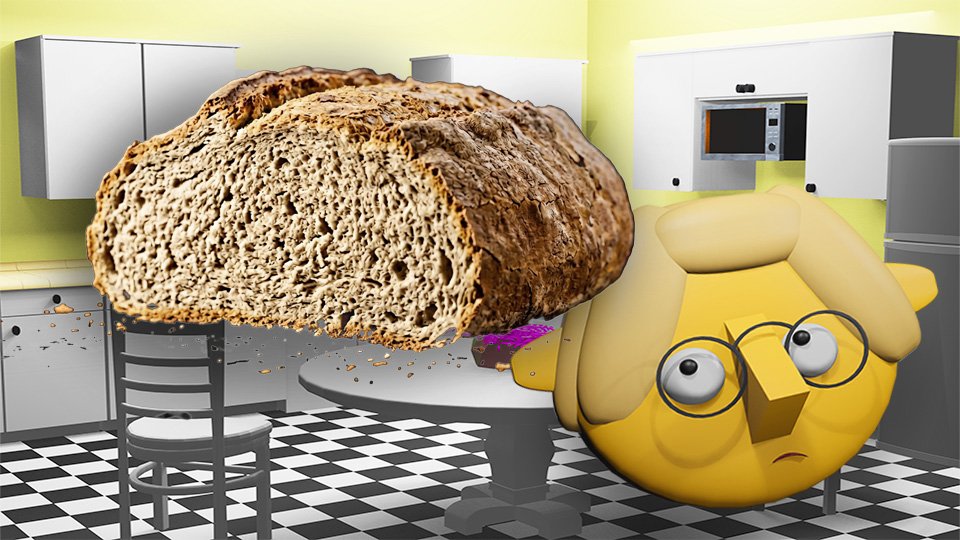
Somewhere in your kitchen right now, there is bread that has passed its peak moment. It’s not bad. It’s not moldy. It’s just no longer the soft, yielding, tear-it-with-your-hands loaf it was two days ago. And because it no longer meets that specific standard, there is a real chance it ends up in the trash.
This would be a mistake. Not a moral failure — just a waste of something that hasn’t finished being useful yet.
Bread doesn’t go bad so much as it goes somewhere else. Fresh bread has one destiny. Day-old bread has different ones — and in many cases, genuinely better ones. The croûton, the breadcrumb, the bread pudding: these aren’t consolation prizes for bread that didn’t make it. They’re the whole point. Entire classic dishes were invented specifically to use bread at this stage. The Italians have been doing this for centuries and they are not wrong.
Here’s the whole arc. From the first slice to the last crouton, nothing has to be wasted.
✨ Days One and Two: Peak Bread
This is bread at its most itself. Soft interior, crackling crust, the kind of loaf you tear rather than slice if nobody’s watching. Eat it as-is. Make sandwiches. Dip it in soup. Toast it. This is what bread was born to do and it does it magnificently for about 48 hours.
Storage: A bread box on the counter, or wrapped loosely in a clean cloth. Room temperature, not the fridge.
Why not the fridge? This is the one that surprises people. Refrigeration actually accelerates staling — the cold causes the starch in bread to recrystallize faster, which is exactly what makes bread go stale. The fridge is bread’s enemy, not its friend. The one exception: a hot, humid kitchen where mold is a faster problem than staleness. In that case, refrigerate and accept the trade-off.
🍞 Days Three and Four: Day-Old and Getting Interesting
The crumb is tightening. The crust has softened slightly as it draws moisture from the interior. It’s less pleasant to eat straight and hasn’t lost a bit of flavor. This is the moment to pivot.
Why does day-old bread work better for certain things? Because moisture is the variable. Fresh bread is full of it. When you make French toast with fresh bread, it absorbs the egg custard too fast, goes soggy, and falls apart. Day-old bread absorbs it at exactly the right rate, cooks up custardy inside and golden outside, and holds together beautifully. The staleness is doing structural work.
Same logic applies to bread pudding, to panzanella (the Tuscan bread salad where stale bread gets soaked, squeezed out, and tossed with tomatoes and olive oil), and to bruschetta, where day-old bread toasts to a firmer, more satisfying base than fresh ever would.
Toast from slightly stale bread is also, quietly, better than toast from fresh. The toaster drives out remaining moisture and re-crisps everything. Fresh bread toasts soft in the center. Stale bread toasts all the way through. File this away.
🧀 Day Five and Beyond: Crouton Country
This is genuinely good territory and most people don’t know it.
- Croutons. Bread cut or torn into chunks, tossed with olive oil and seasoning, baked until golden and fully crispy. The irregular shapes of torn croutons have better texture than the uniform cubes of the store-bought kind. Homemade croutons are not just cheaper — they’re actually better. This is one of those kitchen upgrades that takes 20 minutes and produces something meaningfully superior to anything in a bag.
- Breadcrumbs. Stale bread in a food processor, pulsed to whatever coarseness you want. Fresh breadcrumbs for topping casseroles and binding meatballs. Toasted breadcrumbs — pangrattato — cooked in olive oil and garlic until deeply golden, then scattered over pasta, soup, or eggs. The Italians call this “poor man’s parmesan.” It provides crunch, richness, and a savory nuttiness that genuinely earns that description.
- Ribollita. The Tuscan bread and bean soup where stale bread is the thickening agent — chunks added to a thick vegetable and white bean broth, left to soak, swell, and dissolve into something rich and magnificent. Peasant food at its most intentional. YouTube will show you exactly how it’s done.
❄️ The Freezer: The Pause Button
At any point in this arc — day one, day three, day five — the freezer stops the clock. Slice before freezing so you can pull individual pieces. Toast directly from frozen. The result is excellent and the bread has just bought itself months of useful life.
This is the move for any loaf you know you won’t finish before it stales. Don’t watch it age on the counter. Freeze it and use it on your schedule, not bread’s.
🛒 Gear Worth Having
- A bread box — The correct bread storage. Maintains the right humidity, prevents mold better than open air, extends fresh life by days. Worth every inch of counter space it occupies.
- A small food processor — Turns stale bread into breadcrumbs in about ten seconds. One of those tools that earns its place every single week.
- A half sheet pan — The crouton-baking surface. Even heat, good browning, the right size for a full loaf’s worth of croutons in one go.
- Airtight storage containers — For keeping finished croutons and breadcrumbs crispy. A week of excellent croutons starts with a good lid.
- Ziploc freezer bags — For sliced bread going into the freezer. The airtight seal is everything. Freezer burn is just slow disappointment.
As an Amazon affiliate, I earn from each qualifying purchase. Thank you for supporting TumbleBump.
✨ The Short Version
Fresh bread has one great day. Day-old bread has several more useful ones. Stale bread becomes croutons, breadcrumbs, and the base of dishes that specifically require it. Frozen bread waits patiently until you need it.
Nothing has to be wasted. The loaf just needs a plan.
The trash is not the next step. The toaster is.
📚 Related Reads
- Your Nose Is Not a Food Safety Inspector
- You Forgot to Defrost. Here’s How to Not Ruin Dinner.
- How to Step Away from Fast Food and Instantly Make Your Life Better
TumbleBump is part of the WhistleBump group – find the rest of the family at WhistleBump.com.
24005
©2026 John D Reinhart/TumbleBump.com – all rights reserved