Salt, Fat, and Flame: The Three Knobs of Flavor

Every flavor problem in your kitchen — flat, bland, greasy, dull, somehow wrong — can be traced back to three things: salt, fat, and heat. Learn how these three knobs work and you’ll never follow a recipe blindly again.

Here is a secret that culinary school charges a lot of money to teach you:

Most cooking problems are caused by not enough salt, not enough fat, or wrong heat. And most great dishes are great because someone understood how to use all three.

That’s the whole game. Let’s play it.


Knob One: Salt

Salt is not seasoning. Salt is a fundamental force in cooking. It doesn’t just make things taste salty — it wakes up flavors that were already there, suppresses bitterness, and brings everything into focus. A dish without enough salt tastes vague and flat. The same dish with the right amount of salt tastes like itself.

When to add it: Earlier than you think. Salting at the end just makes things taste salty. Salting as you go — on the raw vegetable, into the pasta water, on the meat before it hits the pan — lets the salt become part of the food rather than sitting on top of it.

How much: Enough that nothing tastes flat, but not so much that salt is the thing you notice. The goal is for salt to disappear — for the food to just taste good without you being able to identify why.

Tasting for salt: Take a small spoonful of whatever you’re making. Chew it, swallow it, wait a moment. If it tastes flat or muted, add salt, stir, taste again. Keep going until it tastes like a full, complete version of itself.

Types of salt:

  •  Kosher salt — the everyday workhorse. Coarser grain, easier to pinch and apply evenly. Most professional kitchens use this.
  • Table salt — fine grain, very common, but saltier by volume than kosher. If a recipe says “kosher salt” and you use table salt, use about half as much.
  • Flaky sea salt — finishing salt. Sprinkle on top of a dish just before serving for texture and a bright, clean pop of salinity.

Knob Two: Fat

Fat does several things that nothing else can do.

It carries flavor. Many flavor compounds are fat-soluble, meaning they need fat to reach your taste buds fully. Herbs bloomed in butter taste more herby than herbs added to water. Garlic cooked in oil infuses the oil with flavor that distributes through the whole dish.

It conducts heat. Fat in a pan gets much hotter than water, which is why sautéing creates browning and roasting creates crust, while boiling can’t. That browning (the Maillard reaction) is flavor.

It adds richness and texture. A sauce with a pat of butter melted in at the end tastes rounder and fuller. A dressing with good olive oil feels silkier. A biscuit made with cold butter has distinct flaky layers.

Common cooking fats and their strengths: 

  • Butter — flavor, browning, richness. Burns at relatively low temp (use clarified butter for high-heat cooking).
  • Olive oil — flavor, Mediterranean character, good for medium heat. Don’t cook it at very high heat — it smokes and turns bitter.
  • Neutral oils (canola, vegetable, avocado) — for high-heat cooking where you want fat without flavor. Avocado oil has the highest smoke point.
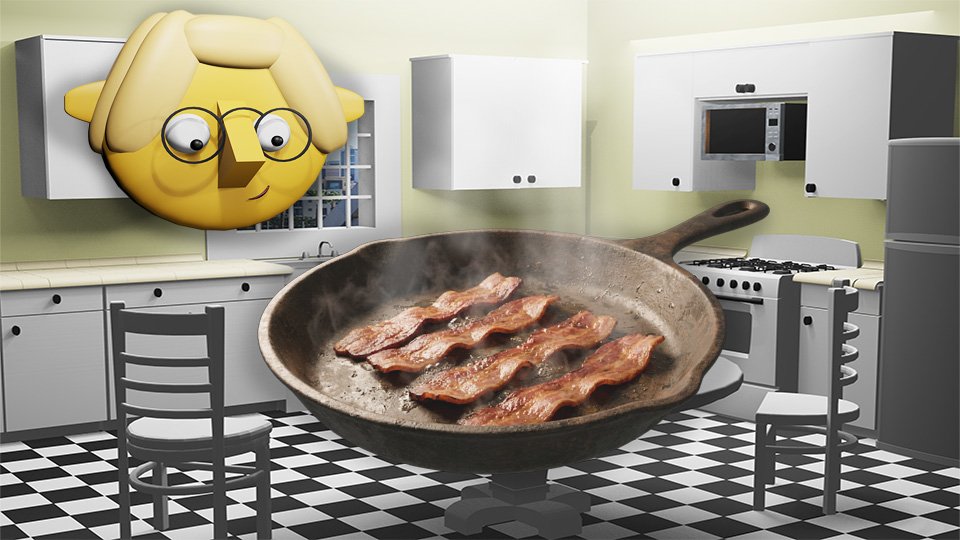
  • Bacon fat / lard — incredible flavor. Old-fashioned and underrated.

Not enough fat: Food sticks to the pan. Food tastes dry and flat. Flavors don’t develop.

Too much fat: Food feels greasy. Sauces break. Baked goods are dense.

The right amount is somewhere between “this seems like a lot” and “this seems like too much.”


Knob Three: Heat

Heat is where cooking actually happens. Fat is your medium. Salt is your tool. But heat is the engine.

The two modes of heat:

Dry heat — roasting, searing, sautéing, grilling — removes moisture and creates browning. This is where crust forms, caramelization happens, and flavor concentrates. Dry heat is flavor development.

Wet heat — simmering, braising, steaming, poaching — the food gently cooks in liquid, keeps things moist, and breaks down tough fibers over time. Wet heat is tenderness.

Most great dishes use both: sear the meat first (dry heat, flavor), then braise it low and slow (wet heat, tenderness).

The main heat mistakes:

  •  Too low, too short — things cook through but never brown. You’ve cooked food without actually cooking flavor.
  • Too high, too fast — the outside burns before the inside is done. Harsh, bitter, uneven.
  • Right heat — the outside caramelizes at roughly the same rate the inside cooks through. This is the sweet spot, and it’s different for every protein, vegetable, and dish.

How to know if your pan is hot enough: Add a drop of water or a single crumb. It should sizzle immediately and evaporate quickly. If it just sits there, not yet. If it instantly vaporizes, too hot.


How the Three Work Together

A great sear on a chicken thigh: dry pan, high heat, enough fat to coat the surface, salted meat. The heat triggers browning. The fat carries the heat evenly and conducts browning across the whole surface. The salt drew out a little surface moisture so you get crust instead of steam.

A perfect pasta sauce: medium heat, olive oil, garlic (fat carries the garlic flavor into the oil), tomatoes, salt added in stages. The heat concentrates the tomato. The fat enriches the sauce. The salt balances the acidity and wakes up the whole thing.

These three things are in every recipe. Now you can see them.


🛒 Gear Worth Having

As an Amazon affiliate, I earn from qualifying purchases. Thank you for supporting TumbleBump.


Recommended Reads: 


Posted on TumbleBump | COOKS Category

TumbleBump is part of the John D Reinhart content family. Writer, illustrator, videographer, and accidental filmmaker — find the whole story at JohnDReinhart.com.

21005

©2026 John D Reinhart/TumbleBump.com – all rights reserved
The “Is It Done?” Checklist

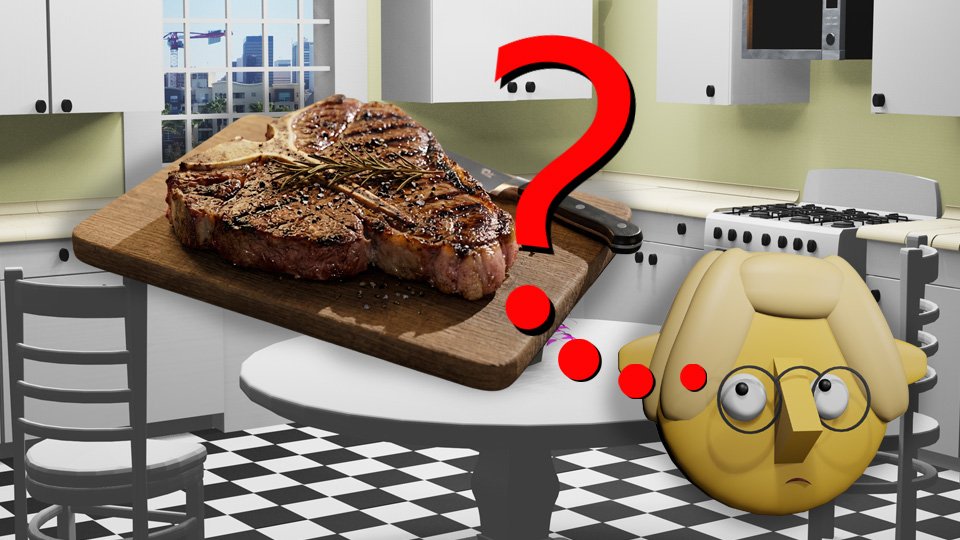
You’re staring at the steak. The steak is staring back. Neither of you knows if it’s done. Here’s the checklist that ends the staring contest — for eggs, meat, pasta, veggies, and everything else that’s ever made you anxious at the stove.

The question haunts every cook, from the brand-new to the pretty-experienced: is it done?

You peer into the pan. You poke it a little. You cut a tiny corner off and squint at it. You put it back. You wait two more minutes and check again. You are, at this point, more committed to uncertainty than to the actual cooking.

Here’s a checklist — food by food, category by category — so you can stop guessing and start knowing.


🥚 Eggs

Scrambled: Done when they look almost done. Pull them off heat while they still look slightly wet — they’ll finish from residual heat and you’ll avoid the rubbery fate.

Fried (sunny side up): The whites should be fully set and opaque. The yolk should still jiggle when you shake the pan.

Fried (over easy/medium/hard): Easy = yolk runs freely. Medium = yolk is jammy, moves slowly. Hard = yolk is fully set, no movement.

Boiled: – Soft boil: 6–7 minutes from boiling water – Medium: 9 minutes – Hard: 12 minutes Then immediately into ice water to stop cooking.

Baked / oven dishes with egg: Set around the edges, barely jiggly in the center. It’ll firm up as it cools.


🍗 Chicken

The gold standard: Internal temperature of 165°F (74°C) at the thickest part, not touching bone.

Visual cues (less reliable, but useful): – Juices run clear (not pink) when pierced – No pink visible when cut at the thickest point – The meat feels firm, not squishy, when pressed

Pro tip: Chicken breast goes from done to dry very quickly. Pull it at 160°F — it’ll coast up to 165°F while resting.


🥩 Beef & Pork

Steak internal temps: – Rare: 120–125°F (very red center) – Medium rare: 130–135°F (warm red center) – Medium: 140–145°F (pink center) – Medium well: 150–155°F (slightly pink) – Well done: 160°F+ (no pink, godspeed)

Ground beef: Always cook to 160°F. No exceptions — ground meat is a different animal than whole cuts, literally.

Pork: 145°F for whole cuts (a little pink is fine and correct). 160°F for ground.

The press test (rough guide): Poke your cooked steak. Rare feels like pressing the meaty base of your thumb when your hand is relaxed. Medium rare feels like pressing it with your hand half-closed. Well done feels firm, like pressing it with a full fist. It takes practice, but it works.


🍝 Pasta

The only test that matters: Fish out a piece and bite it. You want it tender but with a tiny bit of resistance in the very center — that’s al dente. If it’s soft all the way through, it’s overdone. If it snaps, it needs more time.

Ignore the box timing as gospel. Use it as a starting point and start tasting 2 minutes before the minimum.

Bonus tip: Pasta continues cooking for a minute after you drain it, especially if you’re adding it to a hot sauce. Pull it slightly early.


🥦 Vegetables

Roasted: Fork-tender and golden at the edges. If they’re fork-tender but pale, give them more time for color — that’s where the flavor is.

Sautéed: Bright in color (green veg turns vivid before it fades to army green — army green means overdone), tender when poked, still with a little texture.

Steamed/boiled: Pierce the thickest part with a knife tip. It should go in without resistance but not feel mushy.

When in doubt: Taste it. This is always allowed.


🍞 Bread & Baked Goods

Bread: Tap the bottom — it should sound hollow. Internal temp of 190–210°F depending on the type.

Muffins/cupcakes: A toothpick inserted in the center comes out clean or with just a couple of dry crumbs. Wet batter = more time.

Cake: Same toothpick test. Also, the edges should pull slightly away from the pan sides, and the top should spring back when pressed lightly.

Cookies: Pull them when they look underdone. Seriously. They continue cooking on the hot pan. The “done” moment at the oven is always one minute before you think it is.


🍲 Soups, Stews & Sauces

Proteins within: Follow the meat rules above.

Vegetables within: Stab them with a fork. They should be tender.

Stews/braises: When the meat falls apart when pressed with a spoon, it’s done. This is one category where overdone is actually the goal.

Sauces: Done when they coat the back of a spoon and a line drawn through it holds. (This is the “nappe” test and you may now feel fancy.)


🌡️ The One Tool That Eliminates All Guessing

Get a meat thermometer. A good instant-read thermometer costs about $15-30 and removes all uncertainty from meat, fish, bread, and anything else temperature-sensitive. It is the single most useful kitchen tool you are probably not using.


🛒 Gear Worth Having

As an Amazon affiliate, I earn from qualified purchases.


Related Reads

Posted on TumbleBump.com | COOKS Category

TumbleBump is part of the John D Reinhart content family. Writer, illustrator, videographer, and accidental filmmaker — find the whole story at JohnDReinhart.com.

21008

©2026 John D Reinhart/TumbleBump.com – all rights reserved
Five Meal Ideas That Are Faster Than Fast Food

Stop idling in the drive-thru! Discover five delicious, home-cooked meal ideas that go from pantry to plate faster than a “value meal” delivery. Save your sanity and your wallet with these TumbleBump kitchen sprints.

We’ve all been there. It’s 6:00 PM, the fridge is staring back blankly, and the siren song of the drive-thru starts wailing. It’ll be faster just to grab a burger, you think.

Except look at the actual math. By the time you find your keys, navigate the lights, sit behind sixteen idling SUVs, and discover they forgot the dipping sauce, you’ve spent forty-five minutes and twenty-five dollars. Several home-cooked meals beat that math without even trying — and they’re not fast because they’re simple shortcuts. They’re fast because of actual physics.

⚡ Why Some Foods Cook Fast, and Others Just Don’t

Cooking speed comes down to how quickly heat can reach the center of what you’re eating. Thin, small, or already-processed ingredients let heat arrive almost instantly. Thick, dense, or raw-from-scratch ingredients make heat travel further before anything’s actually done. Every meal below is fast for a specific physical reason, not because it’s cutting a corner.

🫓 Why the Quesadilla Wins

A folded tortilla creates enormous surface contact between food and pan at once — the whole flattened package touches heat simultaneously, rather than heat working through a single thick piece of meat or vegetable. Cheese acts as both flavor and glue, binding whatever’s inside without needing its own separate cooking time, since it’s already made and just needs to melt. That’s why a quesadilla scales to almost any leftover: the format does the fast-cooking work, not the specific filling.

🍝 Why Aglio e Olio Is Basically Free Speed

Thin pasta shapes have far more surface area relative to their volume than thick ones, which is why they cook in minutes rather than the better part of an hour a dense cut of meat might need. The real trick behind this dish, though, is parallel processing: garlic infuses into oil over low heat in almost exactly the time pasta takes to boil, so two separate cooking processes finish at the same moment without either one waiting on the other.

🥚 Why Eggs Are the Fastest Protein on the Planet

Eggs have very little water locked inside their structure compared to most proteins, and no connective tissue that needs long, slow heat to break down the way a tough cut of meat does. The proteins simply coagulate — firm up — the moment they hit heat, with nothing else standing in the way. That’s the entire reason a scramble finishes in minutes while a roast needs hours: there’s just less internal work for the heat to do.

🦐 Why Shrimp Basically Cooks Itself

Shrimp is small and genuinely lean, which means heat reaches the center almost instantly — the same property that makes it so fast is exactly why it overcooks just as fast if it’s left a beat too long. A shrimp that’s translucent and grey turns opaque and pink within roughly ninety seconds of real heat, and that speed is the whole reason it reads as a restaurant-level protein for weeknight effort.

🫓 Why Naan Skips the Slow Part of Pizza

Traditional pizza dough needs time to rise before it ever sees an oven — that waiting is most of what makes homemade pizza a project rather than a quick dinner. Naan or flatbread arrives already leavened and already baked once, so all that’s left is melting cheese and re-crisping the surface under a broiler. The bread did its slow work at the bakery. Dinner just inherits the shortcut.

🛒 Gear Worth Having

Large Nonstick Skillet, 12-Inch — Big enough surface for a folded quesadilla or a seared batch of shrimp without crowding either one into steaming instead of browning.

Digital Instant-Read Thermometer — Takes the guesswork out of shrimp and egg doneness, which matters most on the proteins that go from perfect to overcooked in seconds.

Large Stockpot with Strainer Insert — Boils pasta and drains it in one motion, which shaves real time off the one step in this whole list that can’t be rushed by physics alone.

As an Amazon affiliate, I earn from qualifying purchases. Thank you for supporting TumbleBump.

📖 Related Reads


TumbleBump is part of the John D Reinhart content family. Writer, illustrator, videographer, and accidental filmmaker — find the whole story at JohnDReinhart.com.

21005

©2026 John D Reinhart/TumbleBump.com — All rights reserved