
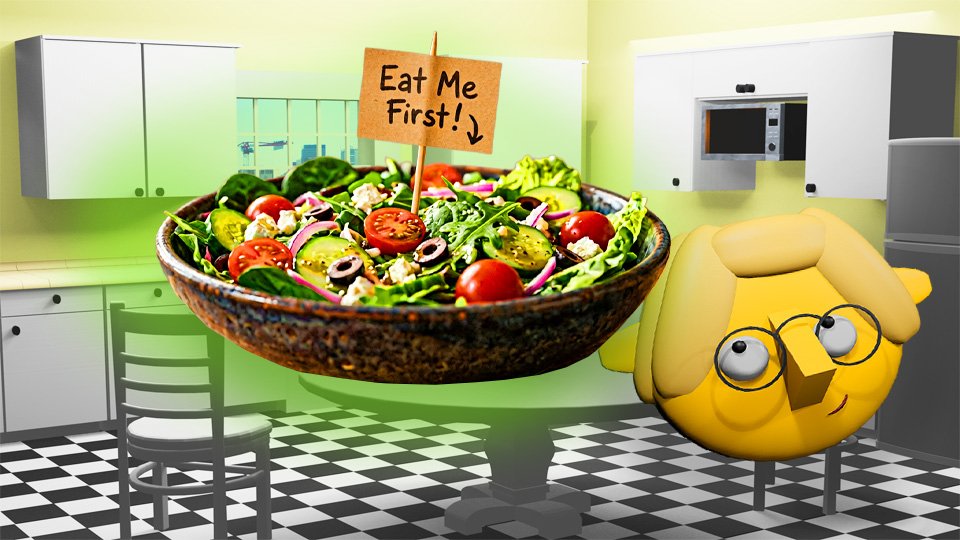
There is a tragedy that plays out in refrigerators across the country every week. Someone buys good food — fresh herbs, a bag of salad greens, some lovely fish — with the best of intentions. Then life happens. The fish gets pushed to the back. The herbs wilt into a damp heap. The salad becomes a liquid apology. And by Sunday, a depressing amount of money goes into the trash.
The fix is not discipline. It’s sequencing.
Your groceries are not all equal. They have lifespans, and those lifespans vary wildly. The skill is simply learning to eat them in the right order — fresh things first, sturdy things middle, shelf-stable things whenever.
This is the Calendar of Perishability.
The Tiers
Tier One: Eat Within 1–2 Days
These are your most fragile ingredients. They should anchor your first meals of the week.
- Fresh fish and shellfish — 1–2 days, maximum. Buy it the day you cook it, or the day before.
- Fresh pasta and filled pasta (tortellini, ravioli) — 2–3 days once opened
- Delicate salad greens (spinach, arugula, spring mix) — wilt fast, eat within 2 days of opening
- Fresh berries — 1–3 days depending on how they look
- Fresh herbs (basil, cilantro, parsley) — 2–4 days; basil especially hates the fridge (keep it on the counter in water)
- Ripe avocados — eat immediately once ripe or refrigerate for 1–2 more days
The move: Build Monday and Tuesday meals around these. Grilled fish on Monday. A big salad Tuesday. Berries with breakfast, every morning, until they’re gone.
Tier Two: Eat Within 3–5 Days
Solid mid-week staples. They can carry you through Wednesday and Thursday without panic.
- Ground meat — 1–2 days raw; cook it early in the week and the cooked version lasts 3–4 days
- Chicken pieces (raw) — 2 days raw; again, cook early
- Whole milk and dairy — check the sell-by, usually 5–7 days after opening
- Cooked grains (rice, quinoa) — 4–5 days refrigerated; make a big batch on Sunday
- Tofu — 3–5 days once opened
- Fresh broccoli, green beans, asparagus, zucchini — 3–5 days
- Eggs — 3–5 weeks (they last much longer than most people think)
- Deli meat — 3–5 days after opening
- Soft cheeses (ricotta, cottage cheese, goat cheese) — 5–7 days
The move: Wednesday and Thursday meals live here. Stir-fry the broccoli. Use the cooked rice as a base. Finish the tofu.
Tier Three: Eat Within the Week (Flexible)
Sturdy, forgiving, and reliable.
- Hard cheeses (parmesan, cheddar, gruyère) — 2–4 weeks, often longer
- Carrots, celery, onions, cabbage — 1–3 weeks refrigerated
- Apples, citrus — 1–3 weeks
- Cooked beans — 5 days refrigerated, indefinitely frozen
- Leftover cooked meat — 3–4 days
- Butter — weeks in the fridge; months in the freezer
- Yogurt — 1–2 weeks past the sell-by date (it’s fine, it’s already fermented)
The move: These are your weekend backstops. Friday’s pasta. Saturday’s grain bowl. The cheese that shows up on everything.
Tier Four: Whenever (Pantry and Freezer)
These don’t care about the calendar. They’re your safety net.
- Canned tomatoes, beans, fish — years
- Dried pasta, rice, lentils — years
- Frozen vegetables and proteins — months
- Oils, vinegars, condiments — months to years
- Dried spices — 1–2 years before they start to fade
The move: Fill in gaps. Sunday pantry cooking when you’ve eaten through everything perishable. Emergency dinner when the week went sideways.
The Weekly Shape
If you think of your week as a timeline, it looks like this:
Monday–Tuesday: Fresh fish, delicate greens, ripe produce, fresh herbs. Eat the things that can’t wait.
Wednesday–Thursday: The mid-range ingredients — cooked grains, cooked chicken, sturdier vegetables, dairy.
Friday–Saturday: Hard cheese, root vegetables, eggs, leftovers, whatever’s left. This is also the day to check the fridge and use up anything approaching its limit.
Sunday: Pantry day. Pasta, canned beans, frozen things. Shop in your own cupboards. Then reset.
The Two Questions to Ask Every Day
Before you decide what to make, ask: What do I have that needs to be eaten soonest? Then: What can I make with that?
This flips the usual logic (decide what you want, then see if you have it) and reduces food waste dramatically. It also produces unexpectedly good meals, because constraint is an excellent creativity prompt.
🛒 Gear Worth Having
- OXO Good Grips GreenSaver Produce Keeper — Absorbs ethylene gas and extends produce life significantly.
- Rubbermaid Brilliance Food Storage Containers — Airtight, stackable, and clear so you can actually see what’s in them.
- Herb Savor Pod — Keeps fresh herbs alive for weeks instead of days. Worth it if you cook with herbs regularly.
- FIFO Can Organizer — Automatically rotates your cans so you use the oldest first. Pantry nerd gear in the best way.
- Dry-Erase Refrigerator Labels — Label containers with the date. Future you will appreciate current you.
As an Amazon affiliate, I earn from each qualifying purchase. Thank you for supporting TumbleBump.
Related Reads
- The Sunday Reset: How to Calendar Your Meals Without Losing Your Mind
- The Anatomy of a $100 Grocery Haul
- What to Get to Make Sure You Always Have Something
TumbleBump is part of the WhistleBump group – find the rest of the family at WhistleBump.com.
22015
©2026 John D Reinhart/TumbleBump.com – all rights reserved