
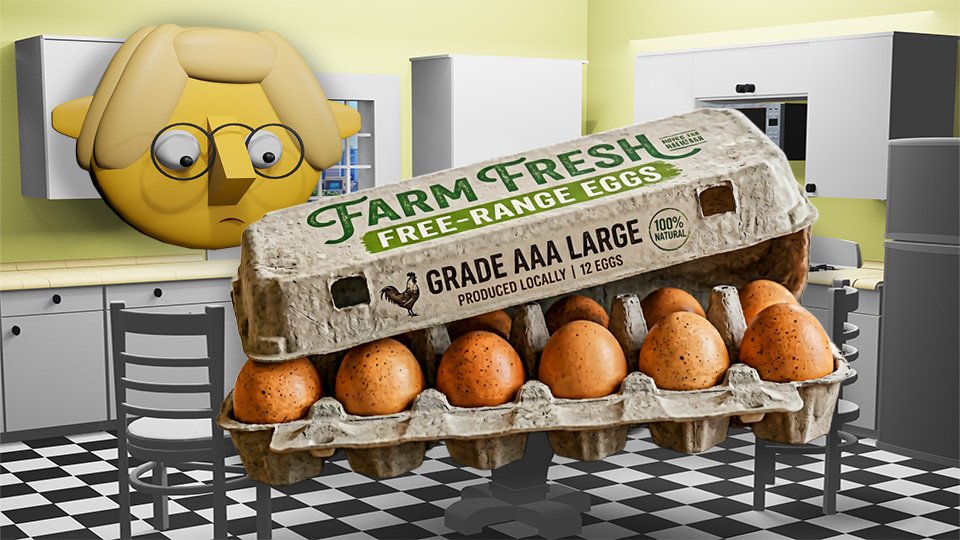
Standing in front of the egg section of any grocery store is an exercise in label overload. There are ten different cartons with different prices, different colors, different certifications, and different claims — and it’s genuinely unclear which ones represent real differences and which ones are marketing.
Here’s the translation guide.
The Grade: AA vs. A vs. B
Eggs are graded by the USDA based on the quality of the shell, the white, and the yolk — assessed by “candling” (shining light through the egg to see the interior).
Grade AA: The highest grade. Thick, firm white; round, high-standing yolk; clean, unbroken shell. Best for applications where appearance matters: fried eggs, poached eggs.
Grade A: Slightly less firm white that may spread a bit more when cracked. Still excellent and the standard for most home cooking.
Grade B: Flatter, thinner whites; may have slightly off-center yolks. Rarely seen at retail — usually used in liquid egg products and commercial baking.
Practical implication: For cooking, Grade A and Grade AA are essentially interchangeable. Buy whichever is available.
The Size: Large Is the Recipe Standard
Eggs are sold by size — Jumbo, Extra Large, Large, Medium, Small — based on the minimum weight per dozen.
Recipes almost universally assume “large” eggs.
If you’re baking, using extra large or jumbo eggs when large is specified adds more liquid, fat, and protein than the recipe accounts for — which can leave cakes denser, cookies flatter, and delicate bakes like soufflés less likely to cooperate.
For savory cooking, nobody cares.
Where size genuinely doesn’t matter at all: scrambled eggs, fried eggs, poached eggs, omelets, frittatas, quiches — anything where the egg is the main event rather than a supporting player in a precise formula. The recipe has no formula to upset. It’s just egg.
For everything that isn’t baking, buy whatever size is cheapest per ounce and don’t give it another thought.
White vs. Brown: Purely Cosmetic
The color of an eggshell is determined by the breed of the hen — not the diet, the living conditions, the feed, or the flavor. White-feathered hens typically lay white eggs; red-feathered hens typically lay brown. That’s the entire story.
Brown eggs are not more natural, more nutritious, or better-tasting than white eggs. They cost more primarily because the breeds that lay brown eggs are larger birds that eat more feed, making production slightly more expensive — not because the eggs are superior.
Buy whichever is cheaper.
The Housing and Living Condition Terms
This is where the meaningful differences live.
Conventional/Cage: Hens kept in small wire battery cages, roughly the size of a sheet of paper. No ability to exhibit natural behaviors (foraging, nesting, dustbathing). The cheapest eggs.
Cage-Free: Hens kept in a barn or enclosed facility with no individual cages. More space and ability to walk, but no outdoor access and often still very crowded. A modest improvement over conventional.
Free-Range: Cage-free plus some outdoor access. The catch: “some outdoor access” can legally mean a small concrete patch accessed through a tiny door. The term is often more marketing than meaningful improvement.
Pasture-Raised: The substantive term. Hens spend most of their time outdoors on actual pasture, typically with a minimum of 108 square feet per bird (the Humane Farm Animal Care standard). These hens eat a natural diet supplemented by feed and produce eggs with noticeably richer, more orange yolks. This is the term that reflects a genuine difference in how the hen is raised.
If animal welfare or egg quality matters to you: Pasture-raised is the meaningful tier. Cage-free and free-range represent incremental improvements but are often overstated.
The Nutrition and Feed Claims
Organic: Hens are fed certified organic feed (no pesticides, no GMOs) and receive no antibiotics. Says nothing about living conditions.
Omega-3 Enriched: Hens are fed a diet supplemented with flaxseed or algae, which increases the omega-3 content of their eggs. The increase is real but modest — you’d need to eat several of these eggs daily to approach what a serving of salmon provides.
Vegetarian-Fed: Hens were not fed animal byproducts. This sounds like a health benefit but is actually somewhat misleading — chickens are naturally omnivores that eat insects. A truly naturally fed chicken would eat bugs. “Vegetarian-fed” often just means the hens weren’t outdoors eating insects.
Hormone-Free, Antibiotic-Free: All commercially sold eggs in the US are hormone-free by federal law. The hormone-free claim is meaningless on an egg carton. Antibiotic-free has more substance — it means the flock didn’t receive routine antibiotics.
The Date Codes
Sell-By: The date by which the store should sell the eggs. Not a safety date.
Best By / Best If Used By: Quality date, not safety date. Eggs refrigerated properly remain safe and of good quality for 3–5 weeks after the pack date.
Pack Date: A three-digit number (001–365 representing day of year). On the carton somewhere, often below the sell-by date. The most useful date — eggs packed on day 300 were packed on October 27th. Freshest pack date = freshest eggs.
The float test for freshness: Place an egg in a glass of water. Fresh eggs sink and lay flat. Slightly older eggs stand upright. Floaters are very old and should be discarded. This works because the air cell inside the egg grows as moisture evaporates over time.
The Summary Table
| Claim | Meaningful? | What It Actually Means |
|---|---|---|
| Grade AA vs. A | Minimally | Slightly firmer white — largely irrelevant |
| White vs. Brown | No | Breed of hen only |
| Cage-Free | Somewhat | No cages, but still indoors |
| Free-Range | Somewhat | Minimal outdoor access required |
| Pasture-Raised | Yes | Meaningful outdoor time on real pasture |
| Organic | Yes (feed) | Organic feed, no antibiotics |
| Omega-3 Enriched | Marginally | Small increase in omega-3s |
| Hormone-Free | No | All eggs are hormone-free by law |
| Vegetarian-Fed | Debatable | Actually unnatural for chickens |
🛒 Gear Worth Having
- Vital Farms Pasture-Raised Eggs — The most widely available pasture-raised brand. The orange yolks are noticeably richer.
- OXO Good Grips Egg Separator — For baking applications where yolk and white must be separated.
- Egg Storage Container for Fridge — Keeps eggs organized and protected in the fridge; much better than the carton door storage (too warm, too much vibration).
- Nordic Ware Microwave Egg Poacher — For fast weekday poached eggs when the saucepan method feels like too much.
As an Amazon affiliate, I earn from each qualified purchase. Thank you for supporting TumbleBump.
Related Reads
- The Egg and You – A Relationship Worth Fixing
- Eggs: Nature’s Stickiest Oops
- The Anatomy of a $100 Grocery Haul
TumbleBump is part of the WhistleBump group – find the rest of the family at WhistleBump.com.
27008
©2026 John D Reinhart/TumbleBump.com – all rights reserved