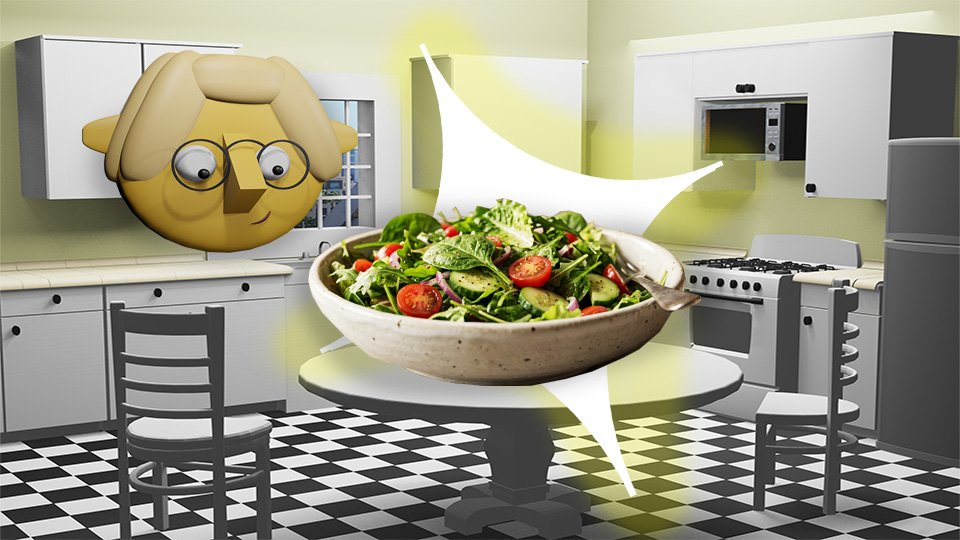
Nobody ever burned a salad. Nobody ever undercooked one, overcooked one, or set off a smoke alarm making one. Salad is fast, cheap, endlessly flexible, and requires zero cooking — which makes it the single most underrated meal in the home cook’s repertoire.
The reason most homemade salads are disappointing has nothing to do with skill. It’s a ratio problem, a dressing problem, or both. Fix those two things and salad stops being a sad bowl of leaves and starts being a meal.
Here’s how it actually works.
🥗 The Ratio
A good salad has three layers: a base, something interesting on top, and a dressing that ties them together. The proportions matter.
Base (greens or grains): About two-thirds of the bowl. Romaine, spinach, arugula, mixed greens, shredded cabbage, cooked farro, cooked quinoa — anything that gives the salad structure and volume.
Toppings: About one-third. This is where the interest lives — vegetables, proteins, cheese, nuts, croutons, fruit, beans. More on this below.
Dressing: Enough to coat, not drown. Two tablespoons of dressing per two large handfuls of greens is a starting point. Toss, taste, add more if needed.
🌶️ The Dressing Formula
Bottled dressing is fine. But once you know the formula, making your own takes about ninety seconds and tastes significantly better.
The formula: 3 parts oil + 1 part acid + something to emulsify + salt and pepper.
- Oil: Olive oil for most vinaigrettes. Neutral oil (vegetable, avocado) for creamier or Asian-style dressings.
- Acid: Red wine vinegar, lemon juice, balsamic, apple cider vinegar, rice vinegar. The acid is what wakes everything up.
- Emulsifier: A small spoonful of Dijon mustard or honey. This keeps the oil and acid from immediately separating and rounds out the flavor at the same time.
Shake it in a jar, whisk it in a bowl, or just pour it straight onto the salad and toss. The jar is easiest because it doubles as storage — it keeps in the fridge for a week.
Example: 3 tablespoons olive oil + 1 tablespoon red wine vinegar + 1 teaspoon Dijon + pinch of salt + grind of pepper. That’s a vinaigrette. Adjust the ratio to your taste and you’ve got a house dressing.
🍱 Turn It Into a Meal
A side salad is greens and dressing. A meal salad adds protein and enough toppings to make it filling. The options are fast and cheap:
- Rotisserie chicken: Pull it apart and pile it on. Three minutes of work, done.
- Canned beans: Chickpeas, black beans, white beans. Rinse, drain, add. High protein, low cost, no cooking.
- A fried or hard-boiled egg: On top of almost any salad, an egg makes it a meal. Sliced hard-boiled eggs are lunch. A fried egg on warm greens is dinner.
- Canned tuna or salmon: Open, drain, add. Inexpensive protein, zero prep.
- Cheese: Feta, parmesan, shredded cheddar, crumbled goat cheese. A little goes a long way toward making a salad feel substantial.
🍻 The Clean-Out-the-Fridge Salad
This is the move. Open the fridge, look at what’s in there, and put it on greens with a dressing. The rules are loose:
- Leftover roasted vegetables? On the salad.
- Last night’s cooked grain? Toss it in as the base.
- Half an avocado? Slice it on top.
- Random cheese, a handful of nuts, a couple of olives? All of it.
- Croutons from stale bread? Cut it into cubes, toss with olive oil and salt, toast in a pan or oven for ten minutes. Better than store-bought.
The clean-out-the-fridge salad wastes nothing, costs almost nothing beyond what you already paid for, and is different every time. Once this becomes a habit, food waste drops noticeably.
📦 The Big Batch Salad
Greens wilt the moment they meet dressing. That’s the problem with prepping a salad for the week. The solution: build the salad without the dressing, and use a base that holds up.
Grain-based salads are the move here. Cooked farro, quinoa, or brown rice holds up for four to five days in the fridge without getting soggy. Layer in roasted vegetables, beans, a protein if you like, and whatever else is around. Keep the dressing separate and add it when you eat.
Cook a batch of grains on Sunday. Make the dressing in a jar. Pack lunch for four days without thinking about it again. This is meal planning for people who don’t like meal planning.
If greens are your base, keep them dry and undressed in the container. Add a paper towel on top to absorb moisture. They’ll stay crisp for three to four days.
⚡ A Few Things That Make Salad Better
- Dry your greens. Wet greens repel dressing. Spin them or pat them dry and dressing actually sticks.
- Season the greens, not just the dressing. A pinch of salt directly on the greens before tossing makes a surprising difference.
- Add something crunchy. Toasted nuts, croutons, seeds, fried shallots. Texture is what separates a salad that’s interesting from one that isn’t.
- Taste it before serving. Too bland? More salt or acid. Too sharp? A drizzle more oil or a pinch of sugar.
- Big bowl, small portions. Toss the salad in a bowl larger than you think you need. Everything distributes evenly without greens escaping onto the counter.
🛒 Gear Worth Having
- OXO Good Grips Salad Spinner — Dry greens fast. The difference between dressing that coats and dressing that pools at the bottom.
- OXO Good Grips Large Salad Bowl with Chopper— Big enough to actually toss without a mess.
- Wide-Mouth Mason Jars (16 oz) — For shaking and storing dressing. Also for the batch salad lunch situation.
- Microplane Premium Classic Zester Grater — For fresh parmesan over the top, or a little lemon zest into the dressing. Both are worth it.
As an Amazon affiliate, I earn from qualified purchases. Thank you for supporting TumbleBump.
Recommended Reads
- Five Meal Ideas that are Faster than Fast Food
- The Three-Act Staple: Why You’re Cooking for Future You
- Knife Safety for the Nervous
TumbleBump is part of the WhistleBump group – find the rest of the family at WhistleBump.com.
21014
©2026 John D Reinhart/TumbleBump.com – all rights reserved