
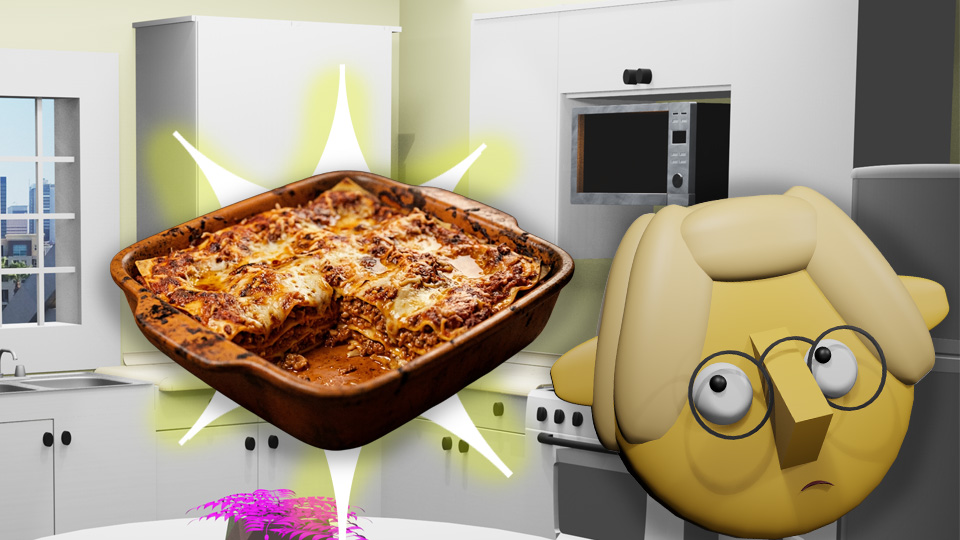
Tuesday’s lasagna deserves better than what most people do to it.
What most people do: pull it out of the fridge cold, put it directly in the microwave, blast it on high for three minutes, and serve something that is searing hot on the outside and still cold in the center, with a rubber layer of pasta and a layer of grease sitting on top of it.
What Tuesday’s lasagna deserves: a proper reheat that brings it back to temperature gently, lets the cheese melt through again, and produces something that is actually as good as the original. Or, with the right technique, better.
This post is about leftover lasagna specifically — but the principles apply to every layered, baked, or sauced leftover: pasta bakes, moussaka, enchiladas, shepherd’s pie, cassoulet. Anything that went into the oven the first time benefits from going back in.
The Oven Method: The Right Way
The oven is the correct tool for reheating baked dishes. It heats gently and evenly, allows the cheese to re-melt properly, and — if you want it — produces a slightly crispy bottom and top that didn’t exist the first time.
The method:
- Let the lasagna come toward room temperature for 20–30 minutes on the counter before reheating. Not mandatory, but it means shorter oven time and more even heating.
- Preheat your oven to 350°F.
- Add a tablespoon or two of water or tomato sauce to the top of the portion before covering. This steam prevents the pasta from drying out during reheating. Don’t skip this.
- Cover tightly with foil. The trapped steam is what rehydrates the pasta layers.
- Bake for 20–30 minutes (for a single portion or small section). A full pan takes longer — 45 minutes to an hour.
- Remove the foil for the last 5–10 minutes if you want a slightly browned, bubbling top. Optional but recommended.
- Let it sit for 5 minutes before serving. The interior keeps cooking and the temperature equalizes.
Temperature check: The internal temperature should reach 165°F. A thermometer removes any guesswork.
The Skillet Method: The Crispy Bottom Upgrade
This method applies specifically to individual slices of lasagna or similar baked pasta, and it produces something the original didn’t have: a crackling, golden, slightly fried bottom crust.
- Heat a non-stick or cast iron skillet over medium-low heat. Add a small amount of olive oil or butter.
- Place the cold lasagna slice in the skillet.
- Add a tablespoon of water to the pan and immediately cover with a lid. The steam heats the interior; the pan crisps the bottom.
- Cook over medium-low heat for 8–10 minutes. The bottom will brown; the interior will heat through.
- Uncover for the last 2 minutes to let the steam escape and the bottom crisp further.
This is, with some justification, better than the original. A fried lasagna bottom is a different and excellent thing.
The Microwave Method: For When Speed Is the Priority
The microwave is not ideal for lasagna, but it’s not catastrophic if done correctly.
- Use a microwave-safe cover or damp paper towel over the portion. This creates steam and prevents the pasta from drying out.
- Heat at medium power (50–70%), not full blast. Full power heats unevenly — boiling some parts while others remain cold. Medium power heats more gradually and evenly.
- Heat in 90-second intervals, checking between each. Stir sauce or rearrange if possible.
- Let it sit for 90 seconds after the last interval. The carry-over heat finishes the job.
The microwave produces acceptable results with these adjustments. It doesn’t produce the skillet version’s crust or the oven version’s even melt, but it gets food hot in 5 minutes.
The Universal Leftover Reheat Principles
These apply beyond lasagna to most baked or sauced leftovers:
Add moisture before reheating. Baked dishes lose moisture in storage. A tablespoon of water, broth, or sauce added before covering prevents drying out.
Cover while reheating. Whether foil in the oven or a damp paper towel in the microwave — covering traps steam and heats evenly.
Reheat low and slow. High heat scorches the outside before the inside is warm. Moderate heat (350°F in the oven, medium-low in a skillet, medium power in a microwave) is consistently better.
Rest after reheating. The 5 minutes of rest after oven heating isn’t a formality — the center is still warming during that time. Cutting immediately produces cold centers and wasted heat.
🛒 Gear Worth Having
- Reynolds Wrap Heavy Duty Foil — For covering the oven reheat. The heavy-duty version seals better and doesn’t tear when you’re working with heavy pans.
- OXO Glass Baking Dish with Lid — Store and reheat in the same vessel. The lid seals for storage and can be replaced with foil for oven reheating.
- ThermoWorks Thermapen for Internal Temperature — Confirms 165°F internal temperature. Takes the guesswork out of “is it actually hot all the way through.”
- Microwave Splatter Cover with Vent — The correct tool for microwave reheating of sauced dishes. Keeps the steam in, keeps the microwave clean.
- Lodge Cast Iron Skillet — The skillet method’s best friend. Cast iron holds heat beautifully and produces an exceptional crust on reheated lasagna.
As an Amazon affiliate, I earn from qualified purchases.
Related Reads
- The Sunday Reset: How to Calendar Your Meals Without Losing Your Mind – Scheduling a week’s worth of food is easier than it seems.
- Five Meal Ideas that are Faster than Fast Food – While lasagna isn’t on this, this reheat is still faster than fast food.
- The Three-Act Staple: Why You’re Cooking for Future You – Lasagna could be a link in this three-part food chain.
Posted on TumbleBump | SAVES Category
TumbleBump is part of the John D Reinhart content family. Writer, illustrator, videographer, and accidental filmmaker — find the whole story at JohnDReinhart.com.
24003
©2026 John D Reinhart/TumbleBump.com – all rights reserved

 tumblebump.com