How Old Does a Leftover Have to Get?

Four days. That’s the number. But there’s more to it than that — because some things last longer, some shorter, and “four days” assumes your fridge is the right temperature and the food was stored correctly from the start. Here’s the complete, honest leftover timeline.

The question everybody asks — quietly, usually standing in front of the open refrigerator — is: is this still okay?

The container has been in there for a few days. It still looks fine. It smells fine. The date was… probably Sunday? Or was it Monday?

Here’s the answer, with more specificity than “use your nose” and more nuance than a single blanket number.


The Four-Day Rule (And Where It Comes From)

The USDA’s general guideline for most cooked leftovers is 3–4 days refrigerated at 40°F or below. This isn’t arbitrary — it’s based on the growth rates of common bacterial pathogens at refrigerator temperatures and the point at which populations can reach levels that cause illness.

Four days is a conservative, reliable number that accounts for typical home refrigerators and typical storage conditions. It’s the right number to default to when you’re uncertain.

The important caveats:

  • It assumes the food was refrigerated within two hours of cooking (one hour if ambient temperature was above 90°F).
  • It assumes your refrigerator is actually running at 40°F or below (many aren’t — measure yours).
  • It assumes the food is in an airtight container rather than uncovered or loosely wrapped.

Leftovers that violated any of these conditions on the way in are on a shorter clock than four days suggests.


The Actual Timelines by Food Type

Not all leftovers are equal. Here are the more specific windows:

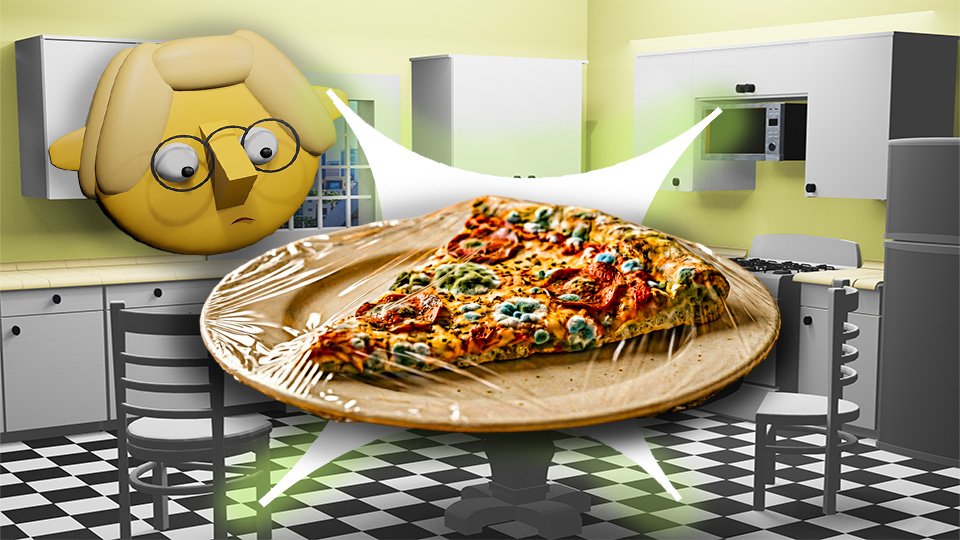
3–4 Days (The Standard Window): – Cooked chicken, turkey, other poultry – Cooked beef, pork, lamb – Cooked fish and shellfish – Soups and stews – Cooked egg dishes (frittata, scrambled, quiche) – Cooked pasta and pasta dishes – Cooked rice and grains (with a note — see below) – Pizza (store in an airtight container) – Casseroles and baked dishes (lasagna, shepherd’s pie)

3–5 Days: – Cooked beans and lentils – Cooked vegetables and vegetable dishes – Deli meats (opened package)

5–7 Days: – Hard-boiled eggs (in shell, unpeeled) — the shell protects them – Opened canned goods transferred to containers (beans, tomatoes, tuna)

1–2 Days: – Raw ground meat (should be cooked or frozen immediately) – Raw whole poultry – Raw fish and shellfish (buy the day of or freeze) – Oysters and live shellfish


The Rice Situation (A Special Case)

Cooked rice deserves specific mention because the risk is slightly different from most cooked foods.

Bacillus cereus spores — heat-resistant, common in the environment — can survive cooking and germinate in cooked rice stored at room temperature. The toxins this bacterium produces can cause illness.

This is not unique to rice (any starchy food can carry it), but rice is particularly associated with it because it’s so commonly left out to cool slowly or stored without refrigeration.

The rules for rice: refrigerate within one hour of cooking, in a shallow container that cools quickly. Eat within 4–5 days. Reheat thoroughly — above 165°F — before eating. Never leave cooked rice out overnight.


Reading the Signs (What the Nose Tells You and Doesn’t)

As covered in the “Your Nose is Not a Food Safety Inspector” post: the four-day guideline exists precisely because many dangerous bacteria produce no smell. “It smells fine on day 6” is not a reliable safety assessment.

That said, smell is still useful for catching obvious spoilage. If something smells off, sour, fermented, or in any way wrong — even within the four-day window — don’t eat it.

The framework: four-day rule is the clock. Smell is an additional alarm. Both matter. Neither alone is sufficient.


The Honest Assessment of What Actually Happens

Here’s the thing most food safety guidance doesn’t say directly: many people have eaten five-day-old leftovers and been fine. Many people have eaten two-day-old leftovers that were improperly stored and gotten sick. The timeline guidelines are probabilistic, not absolute.

What the four-day rule gives you is a reasonable safety margin that accounts for the range of typical home storage conditions. Operating within it consistently means you are almost never in the risky zone. Operating past it consistently means you’re taking on increasing odds of an unpleasant experience.

The math of food safety is also about the cost of being wrong. A foodborne illness ranges from miserable-but-fine to genuinely dangerous depending on the pathogen, the individual, and the dose. The cost of throwing out a four-day-old container of soup is low. The cost of getting seriously ill from keeping it is high. The four-day rule is not paranoia — it’s favorable arithmetic.


The Freezer Exit Strategy

When you realize something is reaching the end of its refrigerator window — day 3 and you won’t eat it by day 4 — freeze it. Today. Before it reaches the limit.

Food frozen at its quality peak is infinitely better than food that limped to the limit and then went in the trash. The freezer is not the end of the road. It’s a reset button.


🛒 Gear Worth Having

  • Refrigerator Thermometer — Confirms you’re actually at 40°F. This is the most important piece of information for accurate leftover timing.
  • Dry-Erase Refrigerator Labels — Write the date on every container before it goes in the fridge. Makes the four-day rule automatic.
  • OXO Airtight Containers Set — Proper sealing slows bacterial growth and keeps food at its quality longer within the window.
  • ThermoWorks Thermapen — For confirming reheated leftovers reach 165°F internal temperature before eating.
  • USDA FoodKeeper App — A free, comprehensive reference for storage times by food type. The authoritative answer to every “how long does this last” question.

As an Amazon affiliate, I earn from each qualifying purchase. Thank you for supporting TumbleBump.


Recommended Reads


Posted on TumbleBump | SAVES Category

24000

©2026 TumbleBump.com – all rights reserved

Your Nose Is Not a Food Safety Inspector

Your nose is a liar. A well-meaning, occasionally useful liar — but a liar. Here’s what the smell test actually tells you, and the system that keeps you off the bathroom floor.

It goes like this: you open the fridge, locate a container of unknown age, pop the lid, and lean in for the sniff test. Your nose reports back. You make a decision. You have been doing this your entire adult life and you consider it a reliable system.

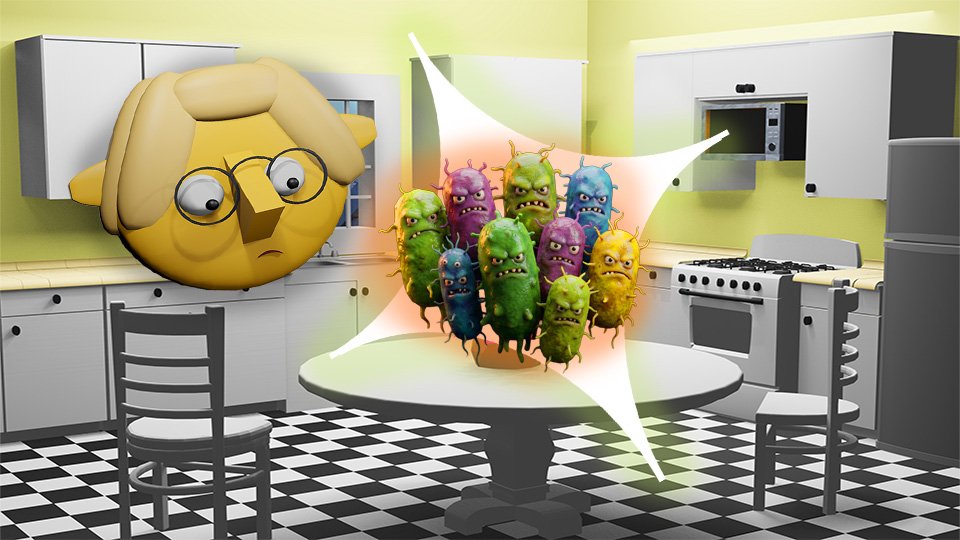
Here is the problem with your system: your nose has no idea what Salmonella smells like. Neither does it know E. coli, or Listeria, or any of the other invisible freeloaders that cause the kind of food poisoning that clears your entire social calendar for three days.

Your nose is excellent at detecting things that smell bad. It is completely useless at detecting things that will make you sick. These are not the same category of problem, and the gap between them is where food poisoning lives.

Your nose is not lying to you, exactly. It’s just working its own job description, which was never “food safety inspector.” It’s more of a “does this smell weird” consultant with a very limited contract.

✅ What Your Nose Is Actually Good At

Credit where it’s due. Your nose does handle some things reliably:

  • Rancid fats. Old butter, stale nuts, cooking oil that’s been sitting since the last administration — oxidized fat has a sharp, almost crayon-like smell that your nose catches every time. Won’t kill you. Will taste terrible. Nose wins.
  • Souring. Milk that’s turned, over-fermented yogurt, produce going fizzy in the back of the drawer. Your nose identifies sourness reliably. In early stages this is more unpleasant than dangerous, but the signal is real.
  • Meat that’s gone off. Putrefaction — the smell of protein properly decomposing — is one of the most unmistakable smells on earth. If your chicken smells like that, your nose has done its job. No further consultation required.
  • Mold. Musty, earthy, sharp. Often detectable before you can see it. Your nose here is actually ahead of your eyes, which is a rare compliment.

So yes. Your nose has a skill set. It’s just a very specific skill set, and “detecting dangerous pathogens” is not on the list.

❌ What Your Nose Cannot Detect (The Actual Problem)

This is the part worth paying attention to. The bacteria responsible for the most serious foodborne illness are, almost without exception, completely odorless.

  • Salmonella — no smell, no visible change, no taste difference. Chicken that looks perfect, smells perfect, and tastes fine can be fully loaded with it. This is why “cook to temperature” is not optional advice.
  • E. coli O157:H7 — the strain behind serious outbreak headlines produces nothing detectable in contaminated ground beef. Smells fine. Is not fine.
  • Listeria — the overachiever of food pathogens. Not only odorless, but capable of multiplying in your refrigerator. Most bacteria slow down in the cold. Listeria treats your fridge like a comfortable apartment.
  • Staph toxins — here’s the truly annoying one. Staphylococcus aureus produces toxins that are odorless, tasteless, and heat-stable. Meaning you can cook the bacteria out of the food and still have a problem, because the toxins they left behind are not going anywhere. The smell test and the cooking step both miss this one entirely.

The pattern: the things your nose catches are mostly unpleasant. The things your nose misses are the ones that put you in bed for three days. The smell test is a comfort, not a verdict.

🌡️ The Actual System: Time and Temperature

Food safety runs on two variables and two variables only: time and temperature. Your nose is not one of them.

  • The Danger Zone — bacteria multiply rapidly between 40°F and 140°F. Food sitting in that range is accumulating a bacterial load whether it smells like anything or not.
  • The Two-Hour Rule — cooked food left at room temperature for more than two hours is in risky territory. Above 90°F (hot kitchen, summer cookout), that window shrinks to one hour. Your nose will not alert you when the clock runs out.
  • Your refrigerator temperature — which should be 40°F or below. Many refrigerators run warmer than their settings suggest. A $10 thermometer tells you the truth your fridge dial is not necessarily telling you.

How long is stuff actually safe in the fridge? Here’s the honest guide:

FoodSafe Refrigerator Time
Cooked meat, poultry, fish3–4 days
Cooked eggs3–4 days
Soups and stews3–4 days
Cooked rice and grains4–5 days
Cooked pasta3–5 days
Deli meats (opened)3–5 days
Hard-boiled eggs (in shell)1 week
Raw ground meat1–2 days
Raw whole poultry1–2 days
Raw fish1–2 days

These are conservative guidelines from actual food safety authorities, not optimistic estimates from someone who doesn’t want to throw out the leftover chicken.

🤔 The Right Way to Use Your Nose

Your nose isn’t fired. It’s just been reassigned to a supporting role.

Use it for what it’s good at: catching obvious off smells, rancidity, sourness, and the unmistakable signal of meat that has genuinely turned. Those are real signals worth heeding.

Then apply the time-temperature framework as the actual decision: How long has this been in the fridge? Was it refrigerated promptly? Do I actually know when this went in, or am I just hoping?

“It smells fine” is supporting evidence. The date on the container is the verdict.

And when the date is uncertain, when the storage history is murky, when you’re standing there genuinely unsure — the professional food safety answer is throw it out. Not because it’s definitely dangerous. Because the cost of guessing wrong is a very bad 48 hours, and leftovers are not worth that math.

🛒 The Gear That Replaces the Guesswork

  • Refrigerator thermometer — Confirms your fridge is actually running at 40°F or below. Many aren’t. Ten dollars, removes all doubt, immediately more useful than your nose.
  • Dry-erase fridge labels — Write the date on every container that goes in the fridge. The smell test becomes completely unnecessary when you know exactly how old something is. Revolutionary in its simplicity.
  • Instant-read thermometer — For confirming cooked meat reaches safe internal temperatures. The smell test never applies to raw meat. Temperature does. Every time.
  • Airtight food storage containers — Proper sealing slows bacterial growth and prevents cross-contamination. Also, you can actually see what’s in them, which helps with the dating situation considerably.

As an Amazon affiliate, I earn from qualifying purchases. Thank you for supporting TumbleBump.

✨ The Bottom Line

Your nose is a fine nose. It has served you well in many situations. It has kept you from drinking sour milk and eating rancid butter and standing too close to certain people on public transportation.

It is not, however, a food safety system. It never was. It just got promoted into that role by default because nobody posted the actual rules on the fridge.

Now you have the actual rules. Date your containers. Know your fridge temperature. Respect the two-hour window. When in doubt, throw it out.

Your nose can have its old job back. It was never qualified for this one.

📚 Related Reads

24002

©2026 TumbleBump.com – all rights reserved