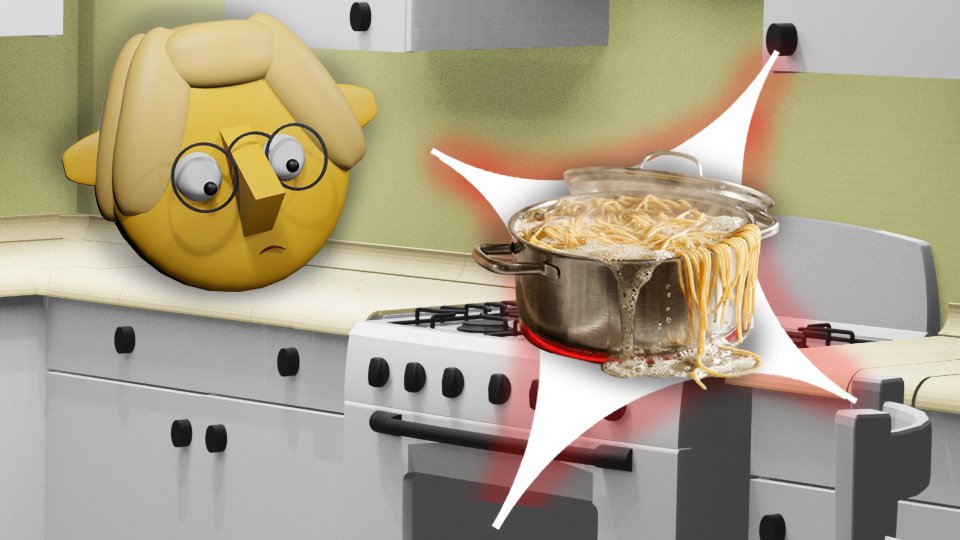
Pasta water boiling over is one of those small kitchen disasters that happens with enough regularity to feel like a personal failing. It isn’t. It’s a physics phenomenon with a specific cause and specific, simple preventions.
Why It Happens
When water boils, steam bubbles form at the bottom of the pot and rise to the surface, where they burst. This is the rolling boil you’re aiming for when cooking pasta. On its own, water bubbles and boils without drama.
But pasta releases starch into the water as it cooks. Starch dramatically increases the water’s surface tension and viscosity. When a starchy bubble of pasta water reaches the surface, instead of bursting cleanly, it stretches — forming a thick, stable foam that doesn’t immediately collapse. The foam builds on itself, rises to the rim, and then, with the confidence of something that has nothing to lose, goes over the edge.
The more pasta you’re cooking, the more starch in the water, the more foam. Smaller pots with less headroom provide less buffer. High heat maintains continuous vigorous boiling that generates foam faster. These are the conditions for a stovetop flood.
Fix One: Use a Bigger Pot
The single most effective prevention is a pot with more volume and more headroom above the water level. A pasta boilover almost never happens in a 10-quart pot with six quarts of water — there’s simply too much room for the foam to build before it reaches the rim.
A 6-quart pot with five quarts of water is at much higher risk. Fill it less, or get a bigger pot.
Fix Two: Lower the Heat Once Boiling
Boilover requires vigorous, sustained boiling to generate foam faster than it can disperse. The moment you add pasta and the water returns to a boil, you can reduce the heat slightly — from high to medium-high — and maintain an active, rolling boil without the maximum foam generation of full-blast heat.
The pasta cooks at essentially the same rate. The foam risk drops significantly.
Fix Three: The Wooden Spoon Trick (And Why It Works)
Place a wooden spoon across the top of the pot. When the foam rises and contacts the wood, it breaks the surface tension of the bubbles and collapses the foam. This actually works, and the reason is interesting: the dry wood provides a high surface-energy surface that preferentially attracts the surfactant molecules in the foam, disrupting their ability to hold the bubble structure together.
The spoon doesn’t prevent boiling — it interrupts the foam before it goes over the edge.
A silicone spoon works less well (too smooth). A wooden spoon with a slightly rough, absorbent surface works best.
Alternative: A boilover preventer disc — a perforated or ridged metal disc placed in the bottom of the pot that creates convection patterns that prevent foam buildup. A low-tech but effective tool for chronic boilover sufferers.
Fix Four: A Little Oil (Minimal Effect, Widely Believed)
Many people add olive oil to pasta water to prevent boiling over. The oil does disrupt foam bubbles at the surface — so it has a small preventive effect. However, the amount of oil you’d need to add to reliably prevent a boilover would be impractical, and more importantly, it coats the pasta and prevents sauce from adhering.
The oil in pasta water is mostly a myth as a boilover prevention and is actively counterproductive for sauce adhesion. Skip it.
When It Happens Anyway
Turn down the heat immediately. The foam collapses almost instantly when the vigorous boiling stops, and the spilled water can be wiped from the burner quickly while the pasta continues cooking at reduced heat.
The burner grates and drip pans: these collect the spilled starch water and, once it dries, become a baked-on mess that is annoying to clean. The fix: wipe or rinse immediately while it’s still liquid. Dried starchy residue requires soaking and scrubbing. Wet starchy residue requires a paper towel.
🛒 Gear Worth Having
- Cuisinart 10-Quart Stockpot — The right size for pasta without boilover risk. More headroom, less drama.
- Kuhn Rikon Boilover Stopper — A perforated disc that goes in the pot and prevents boilover through convection disruption. Inexpensive and effective.
- OXO Good Grips Wooden Spoon — The spoon that lies across the pot. Keep it near the stove.
- Pasta Pot with Built-In Strainer Lid — Designed for pasta, with a lid that allows steam to vent before foam builds.
- Full Circle Cellulose Sponge Cloths — For wiping the stovetop immediately when the inevitable happens. Fast, absorbent, gets the starch before it dries.
As an Amazon affiliate, I earn with each qualified purchase. Thank you for supporting TumbleBump.
Recommended Reads
- Eggs: Nature’s Stickiest Oops
- Cleanup as You Go: The Secret to Not Hating Cooking
- What to Do When It’s Really Baked On
TumbleBump is part of the WhistleBump group – find the rest of the family at WhistleBump.com.
26001
©2026 John D Reinhart/TumbleBump.com – all rights reserved