
The Essential Five: Your Kitchen’s Stable of Staples

The Culinary Launchpad: Imagine having the power to whip up a delicious, home-cooked meal any night of the week without a frantic trip to the store. By mastering these five essential staples, you are claiming your independence and building a pantry that works as hard as you do. Start here, and turn your kitchen into a place of endless possibility.

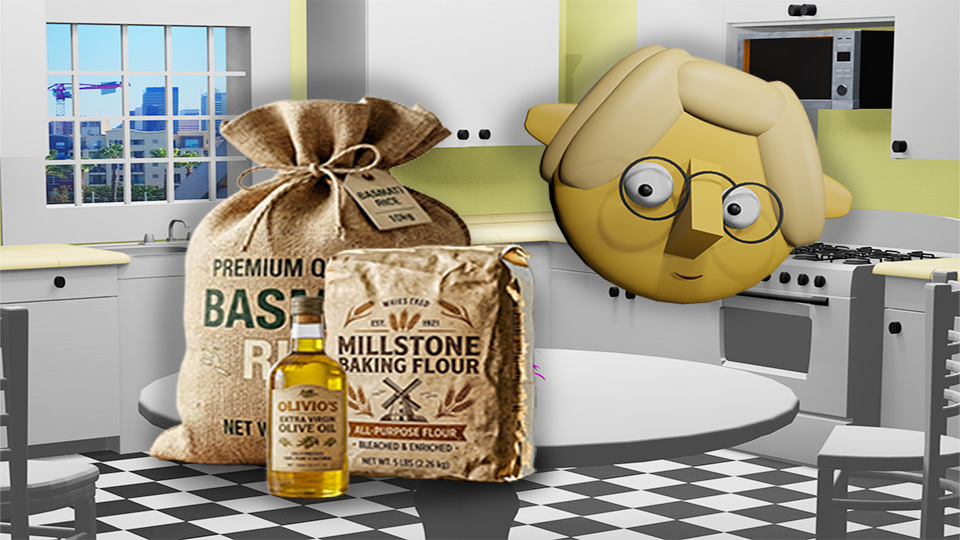
A Blender 3D render of a pound of flour, a sack of rice, and a bottle of olive oil on the TumbleBump kitchen table while Tumby looks on, by John D Reinhart

The Core Principle: Five Staples = Infinite Possibilities (And You’re Smarter Than You Think You Are)

This is the mindset shift that separates people who panic at the stove from people who actually know what they’re doing.

Cooking doesn’t require magic. It requires building blocks. A staple is an ingredient that:

  • Lasts forever (or close to it)
  • Works in a thousand different dishes
  • Costs almost nothing
  • Is hard to mess up

With five staples, you’re not limited to five meals. You’re limited only by your imagination (and probably your willingness to try).

Understanding this means understanding that cooking is a skill you already have. You just forgot where you put it.


Staple #1: Rice (The Foundation)

Rice is the workhorse of kitchens everywhere—from Tokyo to Tallahassee to your own apartment.

What to Buy

White rice (long-grain, medium-grain, it doesn’t matter that much when you’re starting out). Avoid the fancy “jasmine” or “arborio” stuff for now. Save that for when you’re confident. Buy a big bag. It’s cheap and lasts forever.

Real talk: Don’t buy “minute rice” or instant rice. You’re paying for convenience that takes exactly four extra minutes to avoid. Learn the regular kind.

Why It Matters

Rice is neutral. It doesn’t have a personality. It soaks up flavor like a sponge. It goes with everything: chicken, beans, veggies, curry, tacos (yes, tacos). Your mom probably served rice with something at least once a week.

How to Store It

In a dry place. A cabinet. A pantry. Doesn’t matter where as long as it’s not humid. Rice can live for years and years and years. Don’t worry about it going bad.

Real talk: If you bought it three years ago and forgot about it, it’s still fine. Rice is immortal.

How You’ll Use It

Tonight: Boil rice. Dump a rotisserie chicken on top. Add some frozen broccoli. Done. That’s dinner. Your boyfriend will think you’re a genius.

Tomorrow: Cold rice from last night + scrambled eggs + soy sauce = breakfast or lunch. This is a real meal.

Friday: Rice + black beans + corn + lime = burrito bowls. You’re basically a chef now.


Staple #2: Beans (The Protein That Costs 50 Cents)

Beans are what happen when you want protein but don’t want to spend $15 on chicken.

What to Buy

Canned black beans, pinto beans, chickpeas. Pick whatever sounds good. They’re all $0.50-$1 per can. You can’t go wrong.

Real talk: Dried beans are cheaper, but they need overnight soaking and three hours of cooking. You’re not there yet. Start with canned. When you’re ready for dried beans (in like, 2026), we’ll talk.

Why It Matters

Beans have protein. They have fiber. They’re satisfying. They make you feel like you made an actual meal instead of just assembling ingredients. Plus, your boyfriend won’t realize you opened a can.

How to Store It

On a shelf. In a cabinet. Canned beans last forever. Literally forever. Eat them now or eat them in 2035. They don’t care.

Real talk: Check the expiration date eventually, but honestly, canned goods are basically indestructible.

How You’ll Use It

Quick Taco Night: Heat a can of black beans. Add cumin and garlic powder. Throw in a tortilla with cheese. That’s a taco. You made it.

Salad: Cold beans + rice + veggies + lime dressing = something that looks fancy but took ten minutes.

Chili: Brown some ground beef, dump in two cans of beans, add tomato sauce and spices. Let it bubble for 20 minutes. You just made chili. Your mom is proud.


Staple #3: Flour (The Quiet Genius)

Flour might be the most underrated staple in your kitchen. It’s not just for baking.

What to Buy

All-purpose flour. A big bag. Don’t overthink it. It’s literally just ground wheat.

Real talk: There’s no fancy version you need right now. All-purpose flour does everything a beginner needs it to do.

Why It Matters

Flour thickens sauces. Flour makes dumplings. Flour makes pancakes. Flour makes cookies. Flour is the ingredient that makes things… well, things. It’s foundational in the literal sense.

How to Store It

In a dry place. In an airtight container if you’re fancy. In the original bag if you’re real. It lasts for years. Seriously, years.

Real talk: If bugs get into it, throw it out. But that only happens if you’re leaving it open in a humid kitchen. You’re not.

How You’ll Use It

Thickening Sauce: Make a pan sauce by dusting the pan with a little flour, adding broth, and letting it bubble. Now you’ve made something that looks like you know what you’re doing.

Dumplings: Mix flour with water. Make little pockets. Fill with literally anything. Boil them. You’ve made homemade dumplings. Your boyfriend will lose his mind.

Pancakes: Flour + eggs + milk + baking powder = breakfast that tastes like you actually tried.


Staple #4: Cooking Oil (The Liquid Gold)

Oil is the ingredient that makes food taste good instead of like sadness.

What to Buy

Vegetable oil or canola oil. Cheap, versatile, reliable. A big bottle costs like $5 and lasts forever.

Real talk: Extra virgin olive oil is fancy and delicious, but it’s expensive and burns easily. Get that after you’ve cooked successfully five times. For now, regular oil.

Why It Matters

Oil carries flavor. Oil prevents sticking. Oil makes things crispy instead of rubbery. Oil is the difference between “I cooked this” and “I microwaved this sadness.”

How to Store It

In a cool, dark place. Don’t put it in the fridge (it gets weird). Just put it in a cabinet like a normal person.

Real talk: It lasts for months and months. Don’t worry about it.

How You’ll Use It

Sautéing: Heat oil in a pan. Add veggies. Cook until they’re soft. You’ve made a vegetable side dish.

Frying an Egg: A little oil in a hot pan, crack an egg, let it get crispy around the edges. This is breakfast or a midnight snack, depending on how your evening goes.

Everything: Basically, oil is the ingredient that makes cooking possible. Without it, nothing tastes good.


Staple #5: Salt (The Thing That Makes Everything Better)

Salt is underrated. Salt is actually magic.

What to Buy

Table salt. That’s it. A shaker or a container. It costs $2.

Real talk: Sea salt is trendy. Himalayan salt is pink and Instagram-worthy. Neither of these things matters. Salt is salt. Buy the cheap stuff.

Why It Matters

Salt makes food taste like food. Without salt, even good cooking tastes boring. With salt, boring cooking tastes good. Salt is literally the most important seasoning you’ll ever use.

How to Store It

Anywhere. A cabinet. A shelf. Salt doesn’t go bad. Salt is bad and good at the same time (it’s a mineral). It will outlive your kitchen.

Real talk: Keep it dry and it’s fine forever.

How You’ll Use It

Every single thing: Rice needs salt. Beans need salt. Pasta water needs salt. Eggs need salt. Your boyfriend’s mood improves with salt (okay, that’s not true, but your food does).

The Rule: Taste as you cook. Add a pinch of salt. Taste again. Does it taste better? Good. Add another pinch. Does it taste better? Great. Does it taste like a salt lick? You went too far. Start over.


The Assembly: Your First Meal

You’ve got your five staples. Here’s what happens next:

Rice + Beans + Salt + Oil + A Rotisserie Chicken From the Store = Dinner

  1. Cook rice (follow the bag, it’s not hard)
  2. Heat beans in a pot with a pinch of salt
  3. Warm a skillet with a bit of oil
  4. Shred the rotisserie chicken into the warm oil
  5. Pile rice and beans on a plate
  6. Top with warm chicken
  7. Squeeze a lime (if you have one) or add hot sauce

You just cooked dinner.

That chicken came from the store, but you assembled it. You heated things. You made a plate. You fed someone. That’s cooking.


The Real Talk

Cooking isn’t some mystical thing that only people with fancy culinary school degrees can do. Cooking is understanding five staples and knowing that salt fixes almost everything.

Your mom knew this. Now you know it too.

The next time your boyfriend asks “Can you cook?” you can say “Yeah, actually I can.” And you can mean it.


Related Reads


All staples should be stored in cool, dry places away from direct sunlight. Keep flour and rice in airtight containers to prevent moisture and pest contamination. Check canned goods for dents or leaks before storing. Rotate your pantry—use older staples first.


27010

©2026 TumbleBump.com All rights reserved

Unknown's avatar

Author: John D Reinhart

Publisher John D Reinhart is an avid historian and video producer with a penchant for seeking out and telling great stories. His motto: every great adventure begins with the phrase "what could possibly go wrong?"

Leave a comment